
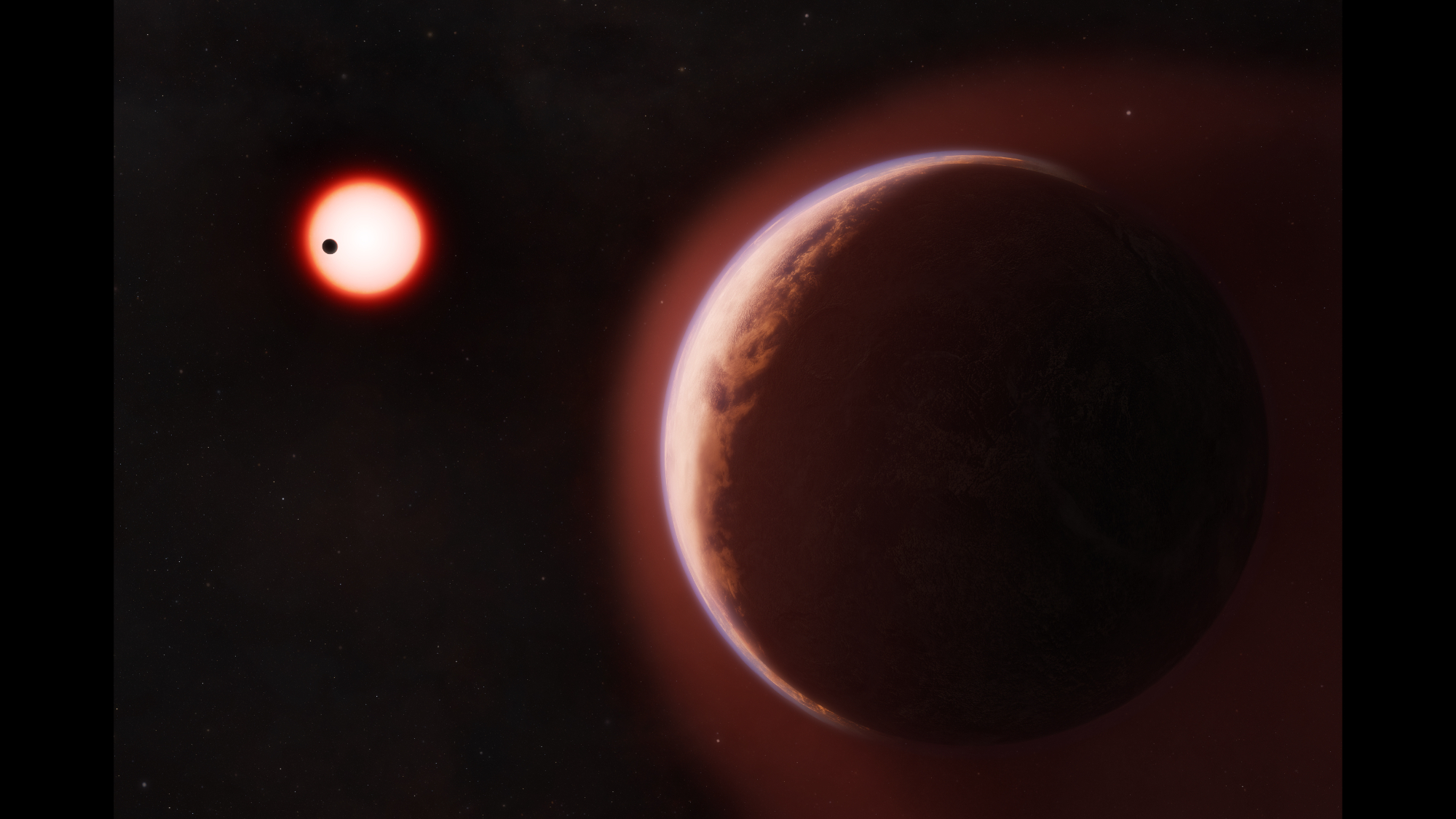
Astronomers have directly detected an atmosphere around LHS 1140 b, a rocky exoplanet orbiting in the habitable zone 48 light-years from Earth. The detection marks the first confirmed atmosphere on a rocky planet in a habitable zone, where liquid water could potentially exist. Lead researcher Collin Cherubim of Harvard University identified helium signatures using the WINERED Spectrograph at Magellan Observatory in Chile, testing a theoretical model he developed during graduate school. The discovery matters because rocky planets orbiting red dwarf stars typically lose their atmospheres to intense radiation, yet LHS 1140 b has retained one over billions of years.
The planet orbits a red dwarf roughly 6 billion years old and maintains temperatures suitable for liquid water. Researchers suggest the planet likely contains substantial water and could support habitable conditions if atmospheric greenhouse effects are present. While other gases may exist in the atmosphere alongside helium, the team expects the atmosphere to persist despite slow helium escape. The findings, published in Science, represent progress in identifying potentially habitable worlds, though researchers emphasize they cannot yet confirm the presence of life or water on the surface.