
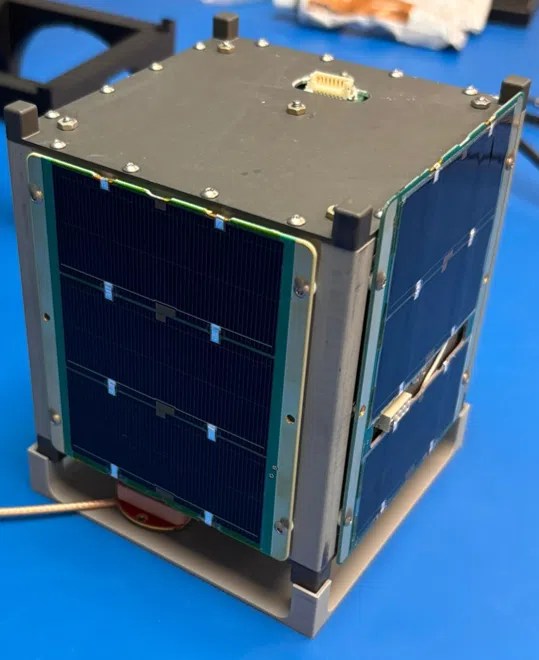
City Labs launched BOHR, a cubesat carrying the company's NanoTritium betavoltaic power system, aboard SpaceX's Transporter-17 mission on July 7. The demonstration marks the first commercial in-orbit test of nuclear-powered satellite technology, designed to validate whether betavoltaic batteries can generate electricity independently of sunlight over extended periods. The technology could enable missions in deep space, permanently shadowed lunar regions, and other environments where solar power is limited. Government agencies including NASA and the Pentagon partially funded the mission, reflecting interest in alternative power systems for satellites operating in contested environments.
The NanoTritium system converts energy from tritium radioactive decay into microwatts of continuous electricity, making it suitable for low-power payloads requiring years of operation but not for powering entire spacecraft. BOHR itself uses conventional solar arrays for the satellite bus while the betavoltaic system independently powers the payload under evaluation. City Labs said this mission is the first commercial nuclear launch to use the FAA's approval process under the National Security Presidential Memorandum-20 framework for radioactive spacecraft. The company plans a 2027 demonstration of a tritium-powered Radioisotope Heater Unit before moving toward operational systems for long-duration lunar surface missions.