
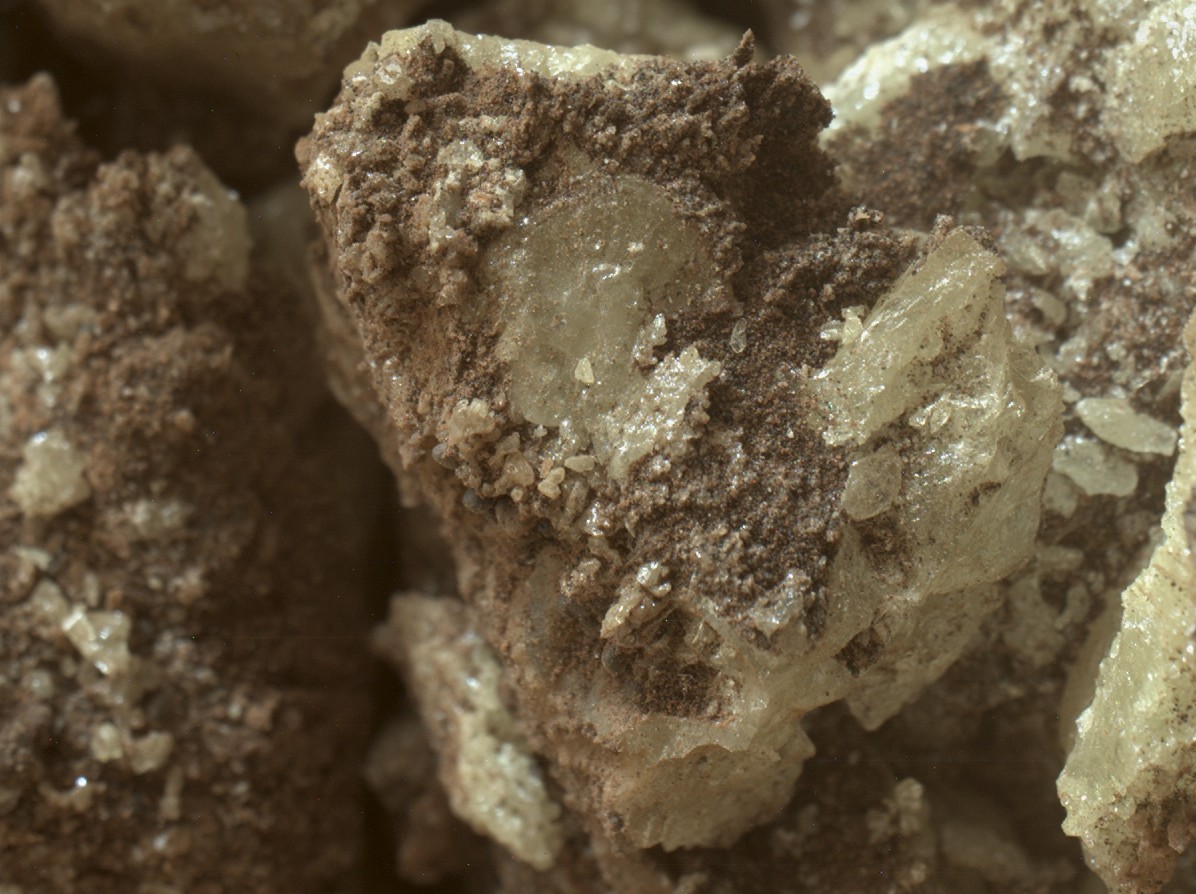
NASA's Curiosity rover found pure sulfur crystals on Mars after driving over and crushing a rock in late May 2024, marking the first time such material has been detected on the Red Planet. The rover's arm-mounted camera captured close-up images of the sulfur fragments days after the discovery. A paper published in Science indicates the sulfur formed roughly 3 billion years ago when subsurface magma released fluids or gases that deposited the mineral at Mars's surface, offering insight into the planet's geochemical history.
The accidental discovery happened during routine rover operations and required no special equipment to expose the sulfur beneath the rock's weathered exterior. The finding suggests Mars had more active hydrothermal or volcanic processes in its past than previously understood from other observations, adding another data point to the emerging picture of early Martian conditions.