
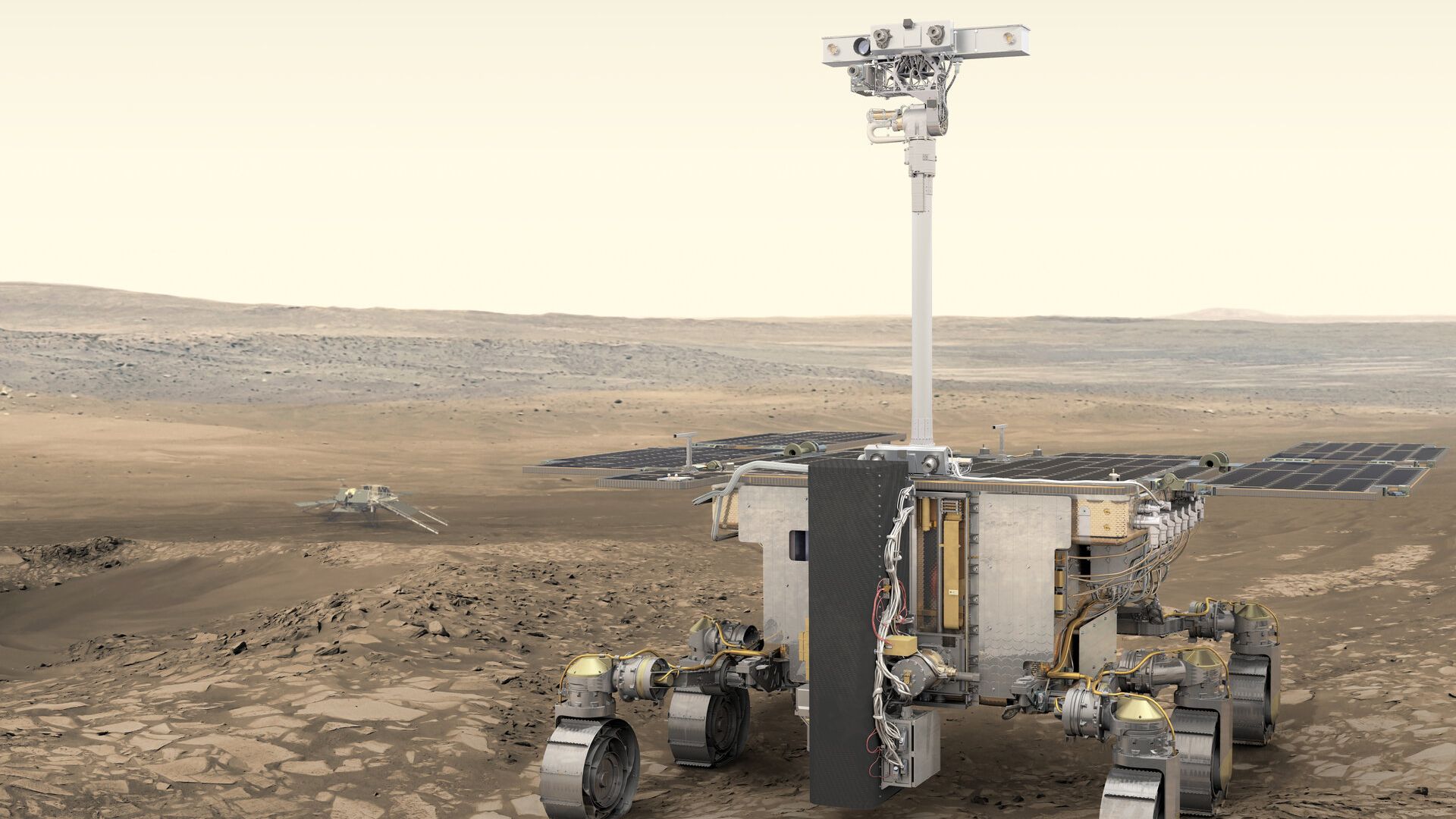
The European Space Agency is targeting Oxia Planum, a depression on Mars where water once flowed, as the landing site for its ExoMars Rosalind Franklin rover in the search for ancient microbial life. Scientists believe clay deposits at the location could preserve biosignatures, since water and the right chemistry for life may have existed there billions of years ago. The rover, scheduled to launch in 2028, will drill below the surface to collect samples and analyze them with onboard instruments while coordinating with the Trace Gas Orbiter already in Martian orbit.
A new study using data from ESA's Mars Express and NASA's Mars Reconnaissance Orbiter identified extensive clay deposits stretching roughly 186 miles from Oxia Planum toward Mawrth Vallis, along with evidence of changing water chemistry over time. Researchers believe the region experienced massive flooding or may have hosted an ocean-sized body of water around four billion years ago -- a regional or global process requiring immense amounts of water. By targeting the oldest clay deposits at the site, the Rosalind Franklin mission aims to understand ancient Martian geology and climate conditions when microbial life would have been most feasible.