
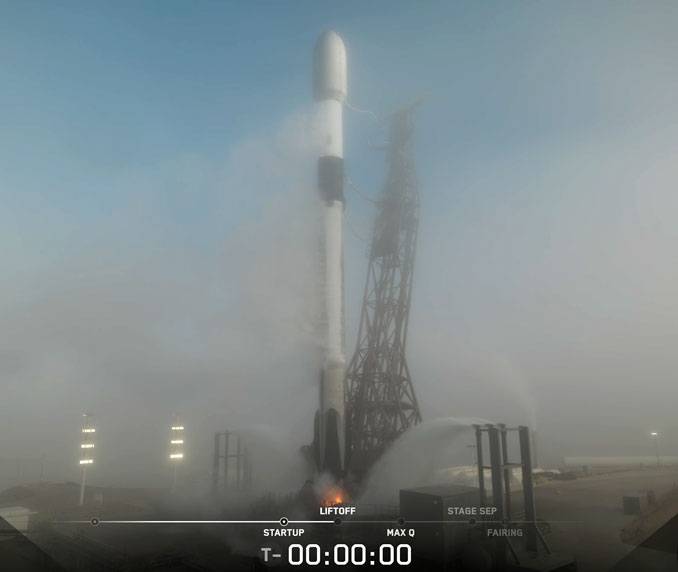
SpaceX aborted the Starlink 17-39 mission on Monday morning at Vandenberg Space Force Base after all nine Merlin engines on its Falcon 9 rocket briefly ignited and then shut down seconds before liftoff. The mission, which aimed to deploy two dozen Starlink V2 Mini broadband satellites, marked only the second post-ignition abort for a Falcon 9 in the rocket's operational history. SpaceX declared the vehicle and payload safe and rescheduled the launch for Tuesday with a window opening at 7 a.m. PDT.
The abort used first-stage booster B1082, which was on its 23rd mission after flying the NROL-145 and USSF-62 national security payloads along with 21 prior Starlink launches. Monday's scrub would have been the 85th Falcon 9 launch of 2024 and the 667th overall for the vehicle. SpaceX provided no immediate explanation for the abort and ended its broadcast without comment.
The last time a Falcon 9 aborted after engine ignition was June 14, 2024, during a Starlink 10-2 launch attempt; that mission eventually flew two weeks later using a different booster. The timing is notable because SpaceX also stood down its Starship Flight 13 test at Starbase in Texas within days of the Falcon 9 scrub, with Elon Musk indicating that at least two Raptor engines required removal and replacement. SpaceX is targeting Thursday for another Starship Flight 13 attempt, though a tropical disturbance in the Gulf of Mexico presents a weather risk.
The two vehicles use different powerplants: Falcon 9 burns kerosene in its Merlin engines, while Starship and Super Heavy rely on methane-fueled Raptors. The back-to-back technical issues across SpaceX's two main launch platforms within a week remain unusual for the company's operational cadence.
- Vehicle: Falcon 9 Block 5 (B1082)
- Payload: Starlink 17-39, 24 Starlink V2 Mini satellites
- Site: Vandenberg Space Force Base SLC-4E
- Orbit: low Earth orbit
- Window: 2026-07-22T14:00:00Z
- Customer: SpaceX
- Outcome: scrub