
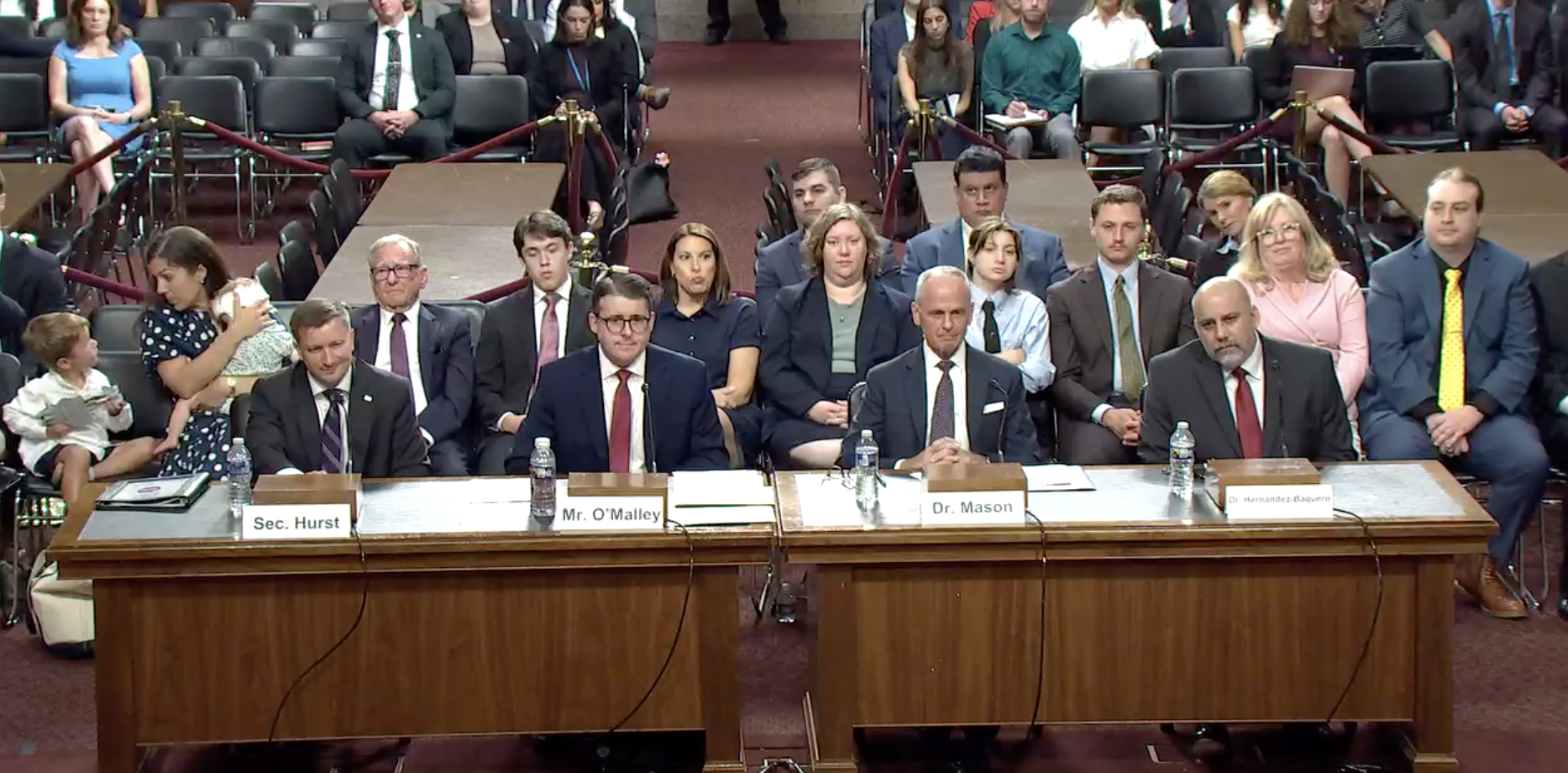
Trump administration nominees for two key national security space positions testified before Congress on July 14, endorsing closer coordination between the Space Force and intelligence agencies while calling for faster military space acquisitions and greater use of commercial technology. Erich Hernandez-Baquero, nominated as the Air Force's top civilian space acquisition official, and Roger Mason, the president's choice to lead the National Reconnaissance Office, appeared before the Senate Armed Services Committee. Hernandez-Baquero would oversee the Department of the Air Force's space acquisition enterprise, a post vacant since January 2025. Mason would replace Christopher Scolese at the NRO, which left on July 10 after leading the agency since 2019.
Both nominees emphasized integrating commercial satellite capabilities into military and intelligence architectures rather than treating them as supplements to government-owned systems. Hernandez-Baquero identified space-based air moving-target indicator systems as a priority and said his focus would include acquisition reform, workforce rebuilding, and leveraging the Space Force's new Portfolio Acquisition Executives structure to reduce integration risks across satellites, ground systems and networks. Mason said the NRO's next-generation architecture would need to combine proliferated constellations of smaller satellites, large specialized spacecraft and commercial capabilities while protecting sensitive technology in partnerships with private companies. Hernandez-Baquero also flagged concern about legacy acquisition programs not built using modern digital engineering tools and said he would review their remaining work, costs and technical risks if confirmed.