
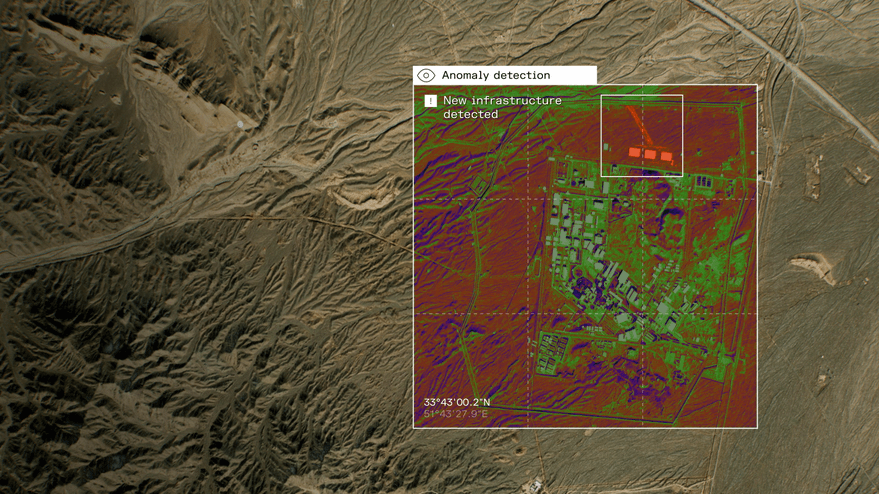
Japan's IHI is considering adding hyperspectral satellites from Finnish startup Kuva Space to its planned 100-satellite Earth observation constellation. The companies signed a memorandum of understanding on July 21 to explore building and operating Kuva's Hyperfield-2 microsatellites in Japan, potentially including domestic manufacturing. The move aligns with IHI's broader effort to establish a sovereign, multi-sensor constellation for national security and civilian applications, with orders potentially beginning in 2027.
The Hyperfield-2 is a 70-kilogram microsatellite that extends Kuva's sensors into short-wave infrared, allowing better identification and distinction of materials by their spectral signatures. About 20 of these satellites would provide daily coverage of roughly 20 million square kilometers across Japan and neighboring regions. Kuva plans to demonstrate the satellite in orbit in 2027, after deploying two smaller 12-kilogram Hyperfield-1 cubesats over the past two years.
IHI is evaluating the constellation's ability to detect vessels that are not broadcasting Automatic Identification System signals and map changes in land cover and use. Kuva's larger constellation of 100 satellites, planned for deployment by the end of 2030, could provide sub-daily monitoring across East Asia, with IHI receiving coverage proportional to satellites it procures. IHI has been evaluating data from Kuva's Hyperfield-1 spacecraft since November after deploying its own hyperspectral demonstrator last year.
IHI's broader Earth observation constellation includes other partners and sensor types. The company ordered four synthetic aperture radar satellites from Finnish firm Iceye last year, with options for 20 more and plans for domestic assembly of two units. British thermal imaging operator SatVu and satellite maker Surrey Satellite Technology Limited have also partnered with IHI, while the constellation design calls for optical and radio-frequency payloads alongside a VDES ship-to-shore communications system.