
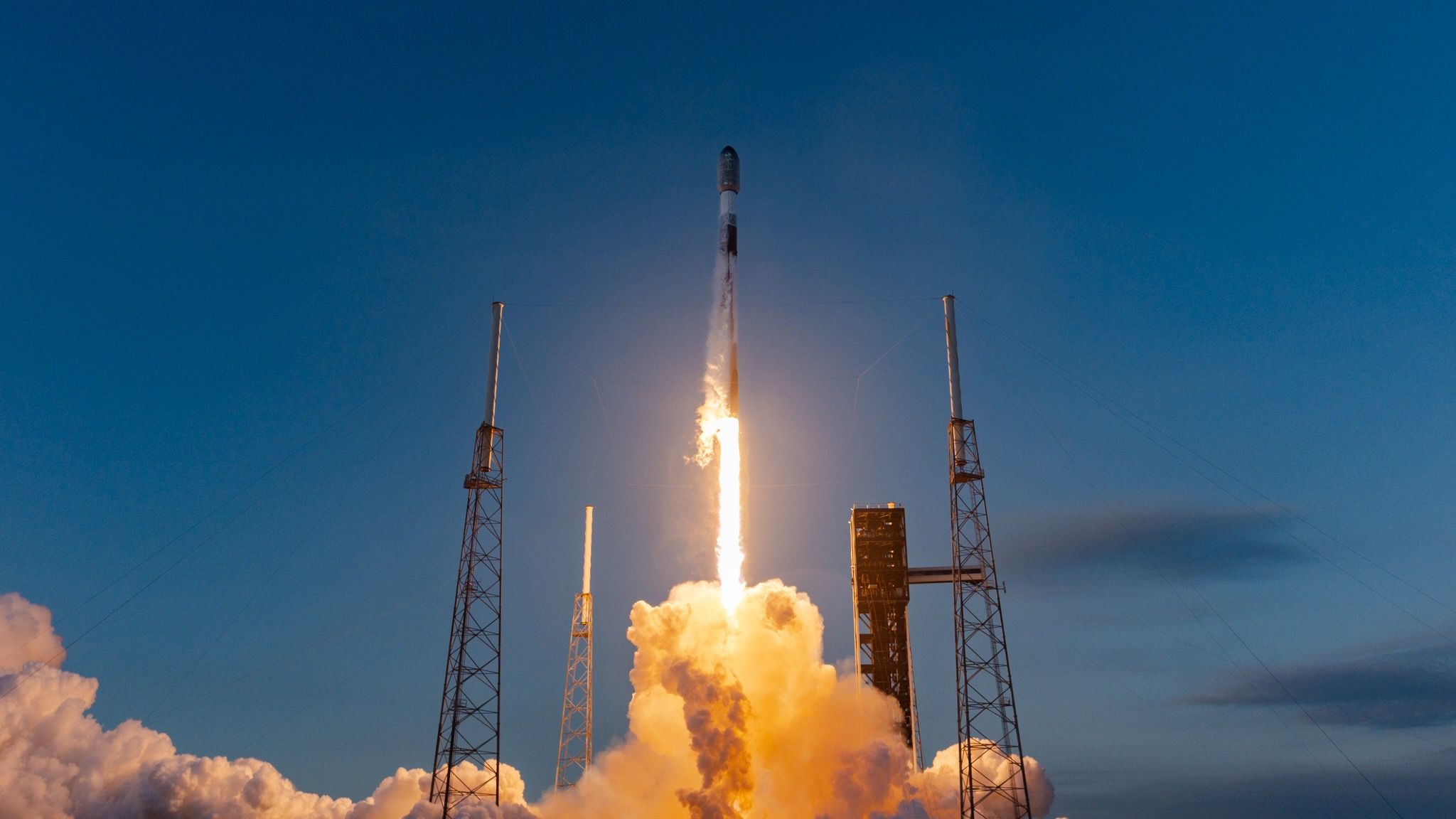
A new study analyzing 4,405 rocket launches from 1960 to 2025 found that the average cost of sending one kilogram to orbit dropped 96% over that period, from $87,023 in 1960 to $3,868 in 2025. Researchers at Politecnico University of Turin and the University of Cambridge developed the largest dataset of rocket launches to date, covering more than 330 rocket configurations from 12 countries. The study, published in PNAS Nexus, shows the space-launch industry has achieved one of the fastest learning rates of any industry, with costs declining by 21.2% each time cumulative payload doubled.
The researchers attributed the sharp cost reductions to two major shifts. The end of the Cold War and the transition to commercial spaceflight allowed for competition and cost optimization where national programs previously launched regardless of expense. More recently, SpaceX's Falcon 9 and the widespread adoption of reusable rockets accelerated cost improvements further. The learning rate for space launch now exceeds that of solar panels, which researchers noted is traditionally used as a benchmark for rapid technological cost reduction.
If current trends continue, the study projects the average cost per kilogram will fall to $1,600 by 2030 and $300 by 2040. However, the researchers identified three significant obstacles that could slow or reverse this trajectory. Space debris poses an escalating risk, with collisions potentially triggering cascading debris clouds. SpaceX currently controls roughly 75% of global payload to orbit, creating monopoly conditions that could incentivize higher pricing and reduce total launch demand. Geopolitical tensions may also prompt nations to develop independent launch capabilities rather than rely on a single U.S. company, potentially reversing the cost gains achieved through competition.
The study authors acknowledged the uncertainty inherent in projecting technological progress at what they describe as a structural break point in the space industry. Per Alessio Terzi, co-author and assistant professor at Cambridge, forecasting during periods of rapid acceleration is inherently difficult, making long-term predictions for launch costs subject to significant revision.