
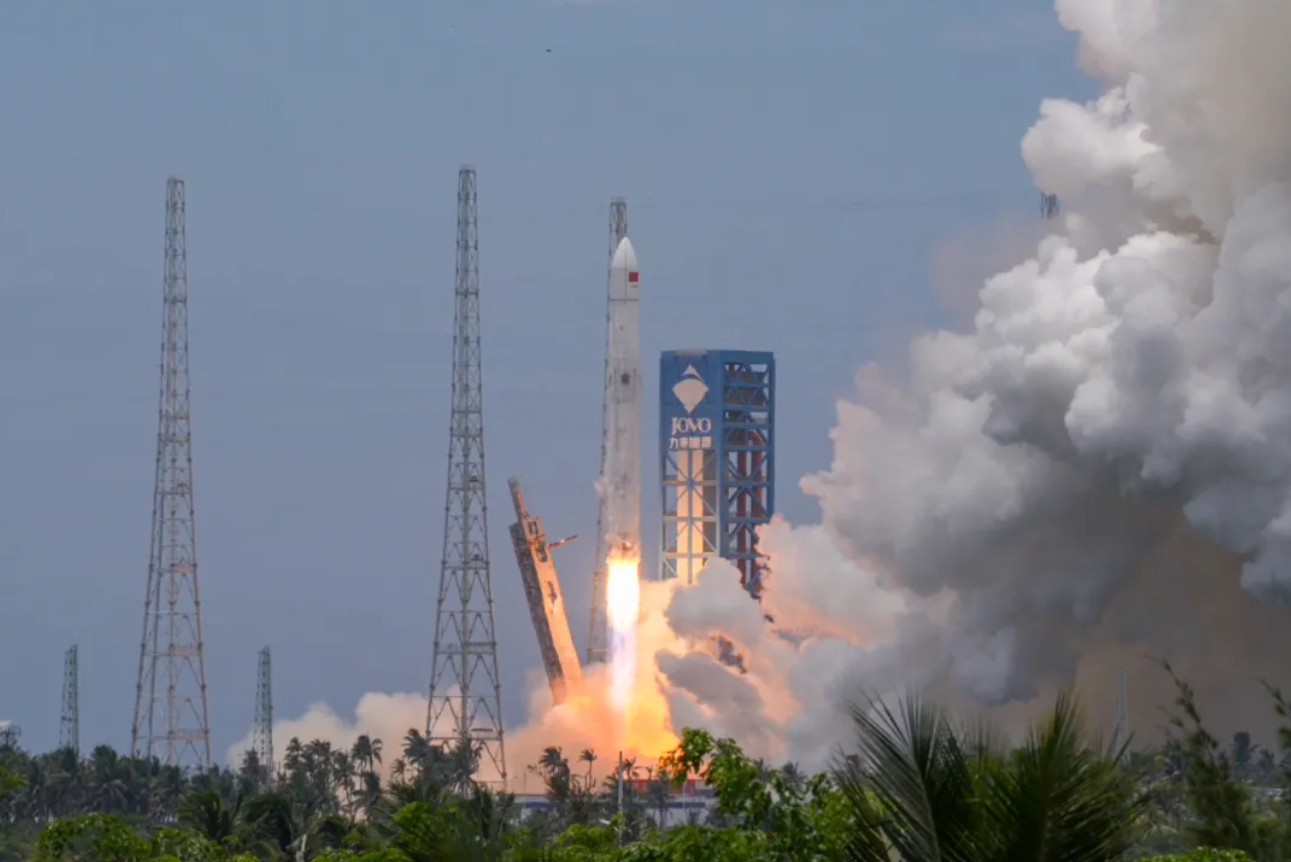
China successfully recovered the first stage of its Long March 10B rocket on July 10, making it the second country after the U.S. to achieve orbital booster recovery. The first stage separated from the second stage during ascent from Hainan Commercial Space Launch Site and performed a controlled powered descent before being caught mid-air by a net system deployed from the Linghang Zhe recovery vessel. The mission also successfully placed an unnamed satellite into orbit, advancing China's reusable rocket program and supporting its crewed lunar ambitions.
The 63-meter-tall Long March 10B can carry 16,000 kg to low Earth orbit in reusable configuration and is powered by seven YF-100K engines on its first stage, producing 890 tons of thrust. This launch served as a validation flight for the Long March 10A, a purpose-built rocket designed to launch China's new Mengzhou crew spacecraft to orbit as part of its lunar program, which aims to land astronauts on the moon before 2030. CASC plans to reuse the recovered first stage before year's end and has indicated a first uncrewed Mengzhou orbital test flight could occur in 2026.