
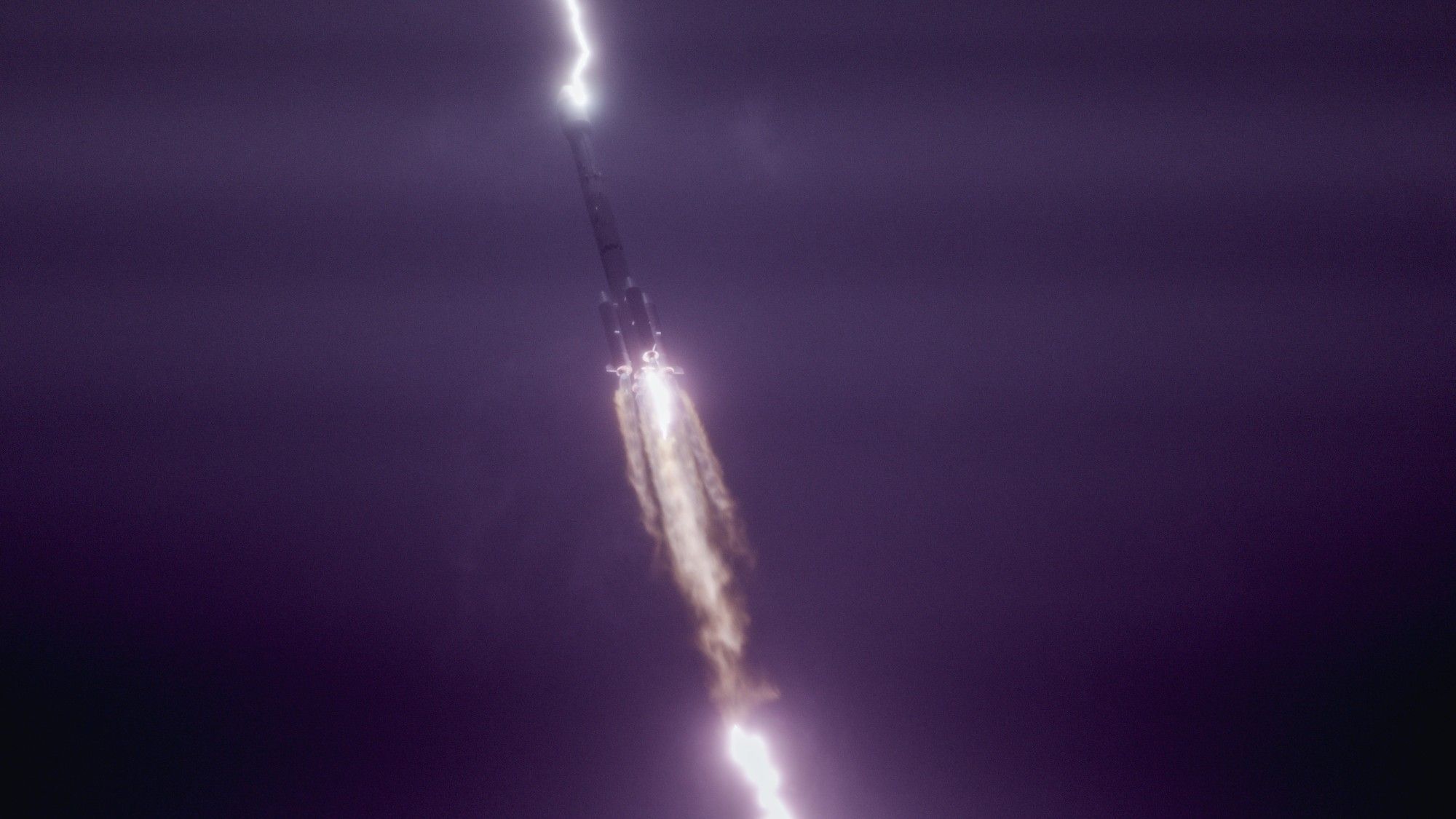
A Long March-3B rocket lifted off from China's Xichang Satellite Launch Center on July 23 carrying a communications relay satellite to geostationary orbit. About 30 seconds into flight, lightning struck the vehicle, but it successfully delivered the payload as planned, according to the China Aerospace Science and Technology Corporation. The satellite will support communications relay for China's Tiangong Space Station and crewed missions.
Lightning strikes on rockets during launch are rare but not unprecedented. NASA's Apollo 12 Saturn V was struck twice shortly after liftoff in 1969 yet still reached the moon, though some non-essential instruments sustained permanent damage. A Russian Soyuz rocket also withstood a lightning strike in 2019 and reached orbit successfully.
Not all vehicles survive such strikes. An Atlas/Centaur-67 rocket struck by lightning in 1987 experienced a computer malfunction that led to vehicle breakup. That failure prompted NASA to develop strict Lightning Launch Commit Criteria defining weather conditions that warrant launch delays.
The tighter weather protocols have proven effective. NASA noted in a technical paper that since implementing the Lightning Launch Commit Criteria, no U.S. launch vehicles have been struck by lightning during ascent. The successful Chinese launch adds another data point to the limited history of rockets withstanding atmospheric electricity during the critical early flight phase.