
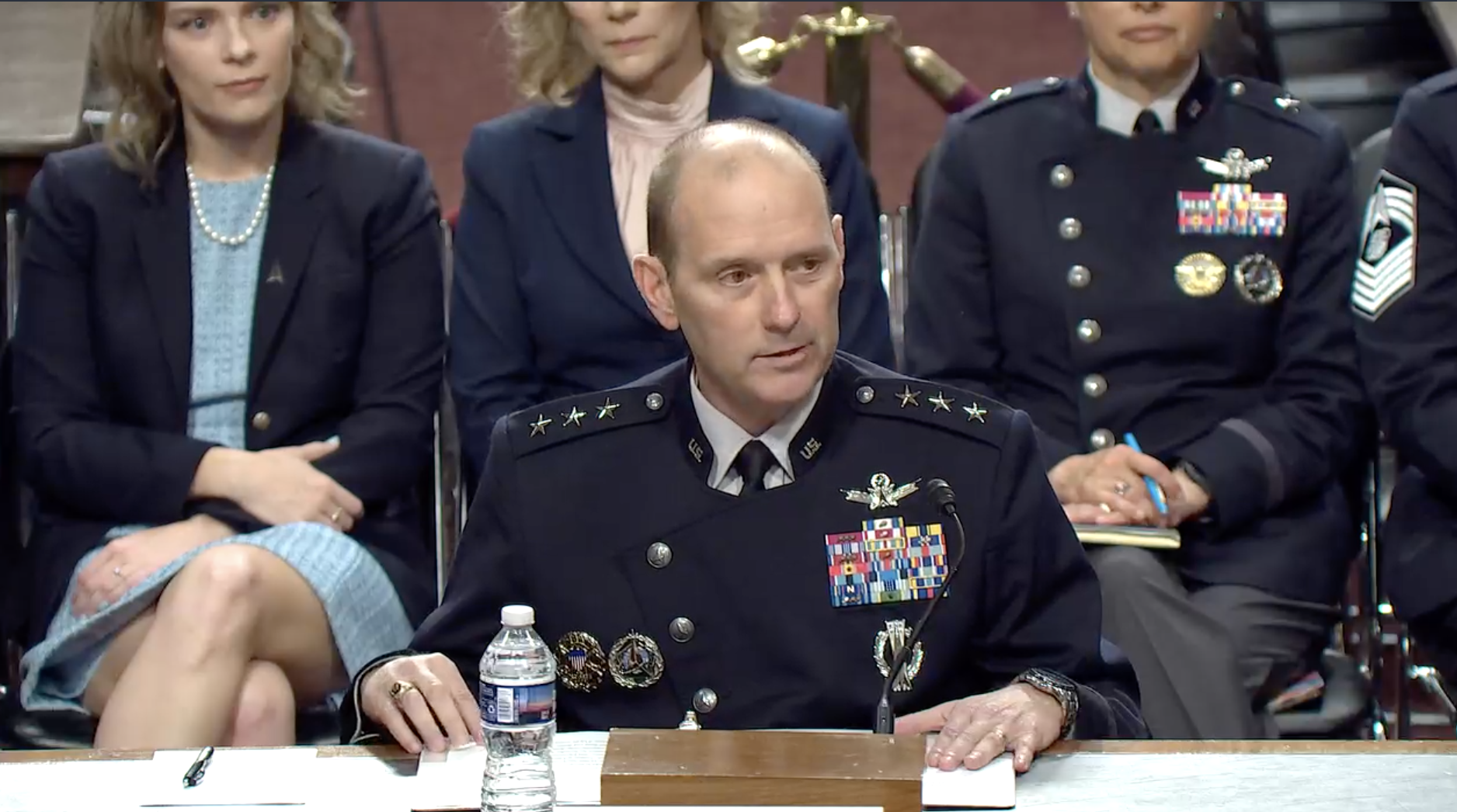
Lt. Gen. Douglas Schiess, Trump's nominee to lead the U.S. Space Force, defended the administration's proposal to more than double the service's budget to $71.1 billion at his Senate confirmation hearing on July 16. He argued the increase is necessary to counter China's rapid expansion of counterspace weapons and military satellite networks, including an intelligence system designed to track U.S. carriers and bombers. Most of the budget growth would fund weapons, facilities, training and equipment rather than personnel, though the proposal includes roughly 2,800 new uniformed Guardians and 2,000 civilian staff -- a major expansion for a service formed in 2019 with a deliberately small workforce.
If confirmed, Schiess would become the third chief of space operations and join the Joint Chiefs of Staff, succeeding Gen. Chance Saltzman. He currently serves as the Space Force's deputy chief of operations. His testimony framed the next phase of the service's development as requiring deeper integration of space forces into military planning and rapid expansion of personnel and systems to protect U.S. forces from space-enabled targeting and support critical operations including missile defense and nuclear command and control.
Schiess drew a distinction on commercial space reliance, saying the military should lease services like satellite communications and orbital tracking from private operators but retain ownership of systems designed to damage or destroy spacecraft. He also indicated the Space Force's protective mandate could extend to commercial and allied satellites if they're incorporated into shared military architectures. On Trump's Golden Dome missile-defense initiative, he said investments in tracking, communications and data systems would benefit the Space Force's broader orbital security mission, though he did not address questions about the program's scale.
Schiess endorsed preserving the Space Development Agency's rapid acquisition model as the Pentagon restructures it, calling it an "incredible organization." The Space Force plans to apply SDA's practices through new Portfolio Acquisition Executives handling broad mission areas. He noted the service lost 14 to 15 percent of its civilian workforce to government-wide reductions and is now hiring roughly 100 civilian employees monthly to rebuild capacity. Recent conflicts in Ukraine and Iran have prompted the Space Force to develop procedures for maintaining satellite services under jamming and to greater incorporate artificial intelligence for space-domain awareness, with human operators remaining involved in decision-making.