
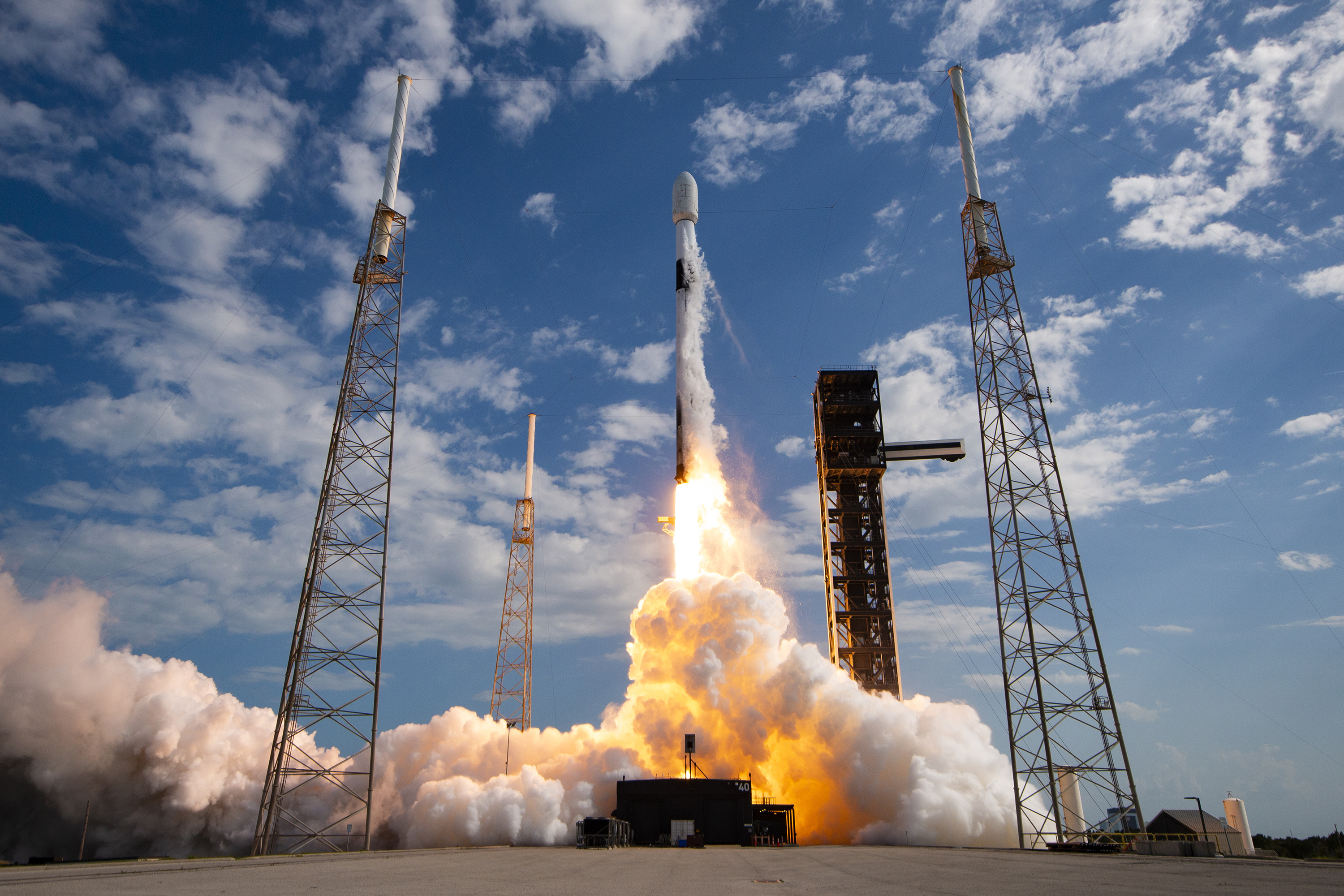
The Mission Robotic Vehicle carrying the Robotic Servicing of Geosynchronous Satellites (RSGS) payload launched July 21 aboard a SpaceX Falcon 9 from Cape Canaveral and is en route to geosynchronous orbit. DARPA funds the program, which will use twin robotic arms developed by the Naval Research Laboratory to service and refuel satellites in orbit. NASA's Goddard Space Flight Center joined the effort in 2024 under an interagency agreement, adding expertise from decades of Hubble servicing missions and robotic operations on the ISS.
The MRV, built by Northrop Grumman, serves as the nation's first multi-mission robotic in-space servicer. The twin dexterous arms will install small propulsion modules called mission extension pods onto existing satellites, extending their operational life by years. Hundreds of functional satellites currently occupy geosynchronous orbit but are often decommissioned early when fuel depletes or equipment becomes obsolete, making this servicing capability commercially relevant.
NASA's support includes developing dynamic simulation and analysis tools, software for performance verification, and a team of flight operators who will control the robotic procedures from the ground. The agency draws directly on its legacy of hands-on space robotics, from the five Space Shuttle servicing missions to Hubble through the Robotic Refueling Mission experiments conducted on the ISS over the past decade. This background positions NASA to handle the technical complexity of orbital servicing operations.
The RSGS mission advances broader U.S. goals for in-space servicing, assembly, and manufacturing capabilities that extend beyond government use into commercial space and exploration. By establishing a functional on-orbit servicing infrastructure, the program enables operators to recover value from satellites that still function but have lost propellant, potentially reshaping economics across the GEO market.