
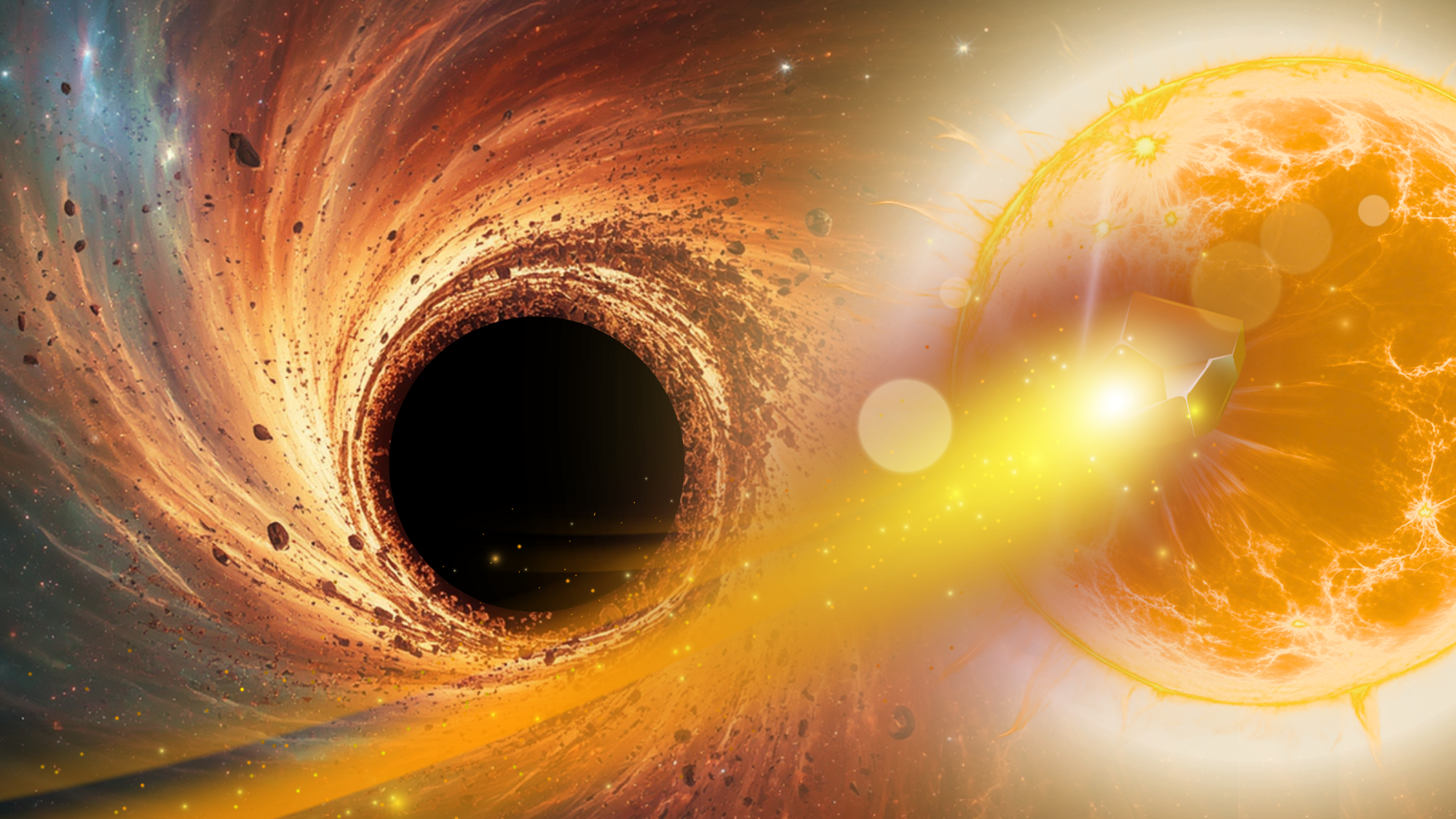
NASA's Nancy Grace Roman Space Telescope, set to launch Aug. 30, 2026, may detect tidal disruption events (TDEs) in the early universe far more frequently than previously thought. A new study published in The Astrophysical Journal suggests that during "cosmic noon" around 11 to 12 billion years ago, these violent stellar shredding events could be common enough for Roman to observe hundreds dating back to that epoch. Because TDEs occur when stars pass too close to supermassive black holes and are torn apart by gravitational forces, they shine brightly enough to outshine entire galaxies, making them useful probes for studying black hole populations in the distant universe.
Roman's High-Latitude Time-Domain Survey will repeatedly scan a region of sky equivalent to 90 full moons, giving it the sensitivity to detect TDEs at greater distances and earlier cosmic times than any previous instrument. The Rubin Observatory is expected to find thousands to tens of thousands of TDEs annually, with hundreds traceable to cosmic noon. This capability addresses a critical puzzle: the James Webb Space Telescope has discovered supermassive black holes weighing millions to billions of solar masses in galaxies less than 1 billion years old, far sooner than existing growth models predict is possible.
Counting TDEs at different cosmic distances could reveal whether early supermassive black holes grew from "light seeds" (smaller black holes born from dying stars that merged and fed rapidly) or "heavy seeds" (massive black holes formed directly from collapsing primordial gas clouds). TDEs favor less massive supermassive black holes, so their frequency at cosmic noon would indicate which population dominated the early universe. As Johns Hopkins researcher Mitchell Karmen stated, Roman's high sensitivity will allow scientists to find multiple TDEs out to greater distances and earlier times than ever before.
Roman's capabilities will complement JWST's revolutionary impact on our understanding of distant galaxies by similarly transforming transient science. By tracking how TDE rates evolve across cosmic history, Roman should help determine which black hole growth pathway explains how supermassive black holes reached such enormous masses so quickly in the early universe.