
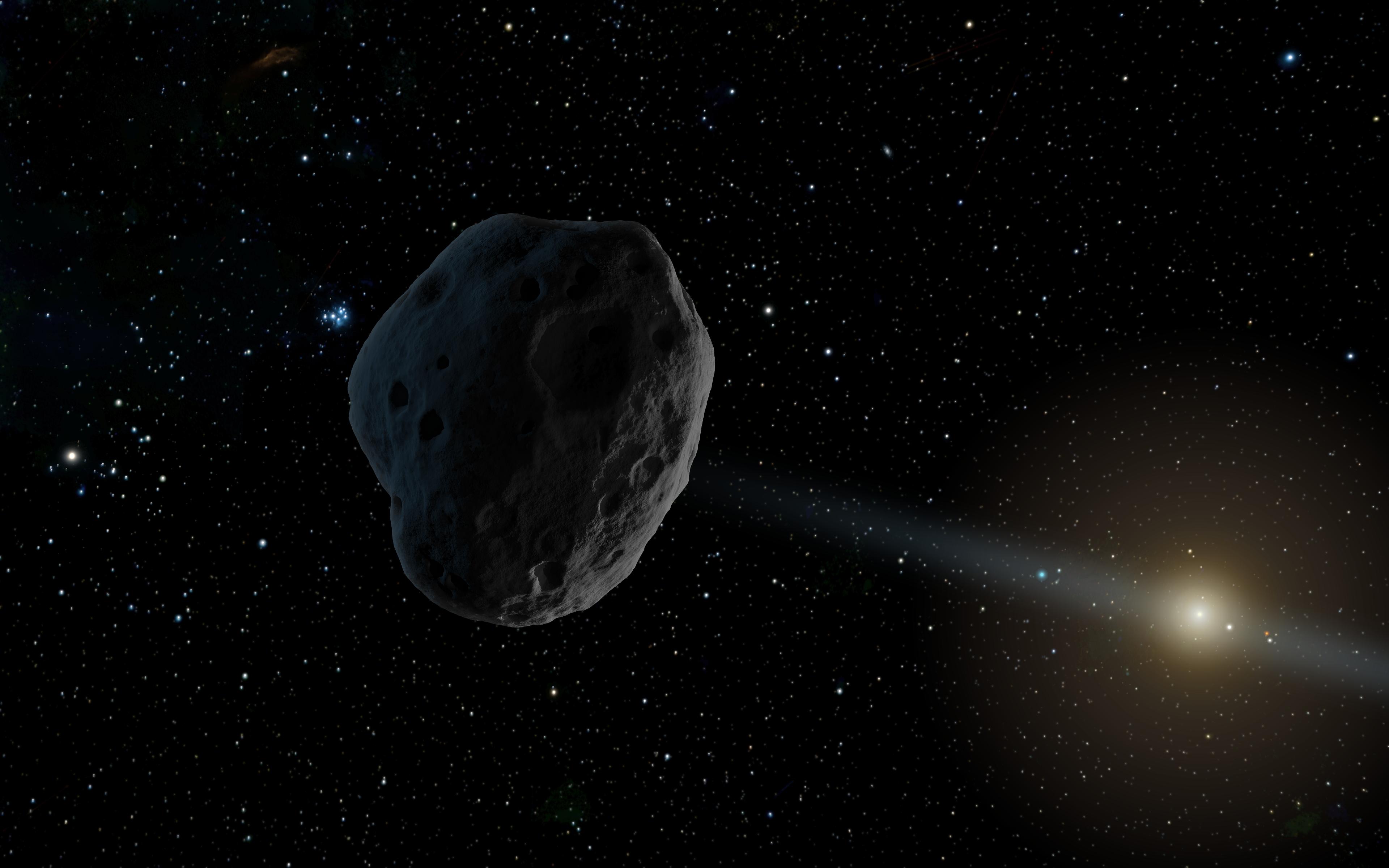
NASA scientists at the Jet Propulsion Laboratory determined that the near-Earth object 1998 SH2, tracked since its 1998 discovery, is actually a comet rather than an asteroid. The object passed within 2 million miles of Earth in August 2025, but failed to appear where radar calculations predicted, signaling unexpected motion. Analysis revealed nongravitational perturbations consistent with outgassing from solar heating, and follow-up observations with the Canada-France-Hawaii Telescope, the European Southern Observatory's Danish Telescope, and the Very Large Telescope confirmed a faint but visible comet tail and coma. The findings, published in Nature Astronomy, highlight how precision astrometry can identify comets misclassified as asteroids.
The discovery has implications for understanding a puzzling class of objects called dark comets, which exhibit orbital irregularities but show little visible cometary activity. About a dozen dark comets have been identified since 2016, and the research suggests many could prove to be regular comets with stronger observational equipment. Distinguishing comets from asteroids matters for planetary defense because cometary outgassing alters trajectories more significantly than asteroid motion alone. NASA's upcoming Near-Earth Object Surveyor mission will support this effort by detecting faint objects including dark asteroids and comets that reflect little visible light.