
NASA is shifting its Mars exploration strategy fifty years after Viking 1's historic 1976 landing, moving from surface rovers to aerial vehicles to study the Red Planet. Viking 1 and its twin Viking 2 conducted the first fully successful Mars surface missions, though their search for life produced ambiguous results that shaped decades of subsequent exploration. The Labeled Release experiment detected carbon dioxide from Martian soil, which some scientists interpreted as possible microbial activity, but most researchers attributed the results to chemical reactions. This uncertainty prompted NASA to pursue a new approach: seeking signs of past water and potentially habitable environments before attempting life detection again.
The two-decade gap after Viking ended with Pathfinder in 1997, which demonstrated a cheaper landing method and deployed the Sojourner rover. Sojourner's discovery of water-rounded pebbles launched the "follow the water" strategy that guided subsequent missions. Spirit and Opportunity landed in 2004, Curiosity in 2012, and Perseverance in February 2021. Curiosity and Perseverance found evidence of past aqueous environments and detected complex organic molecules that may indicate past habitability.
Perseverance collected samples for eventual return to Earth, though NASA is revising its original retrieval plan due to cost concerns. The rover also carried Ingenuity, an experimental helicopter that exceeded all expectations. The 4-pound rotorcraft completed 72 flights over nearly three years, far surpassing its planned five hops and proving that aircraft could operate in Mars' thin atmosphere, which is just 1% as dense as Earth's at sea level.
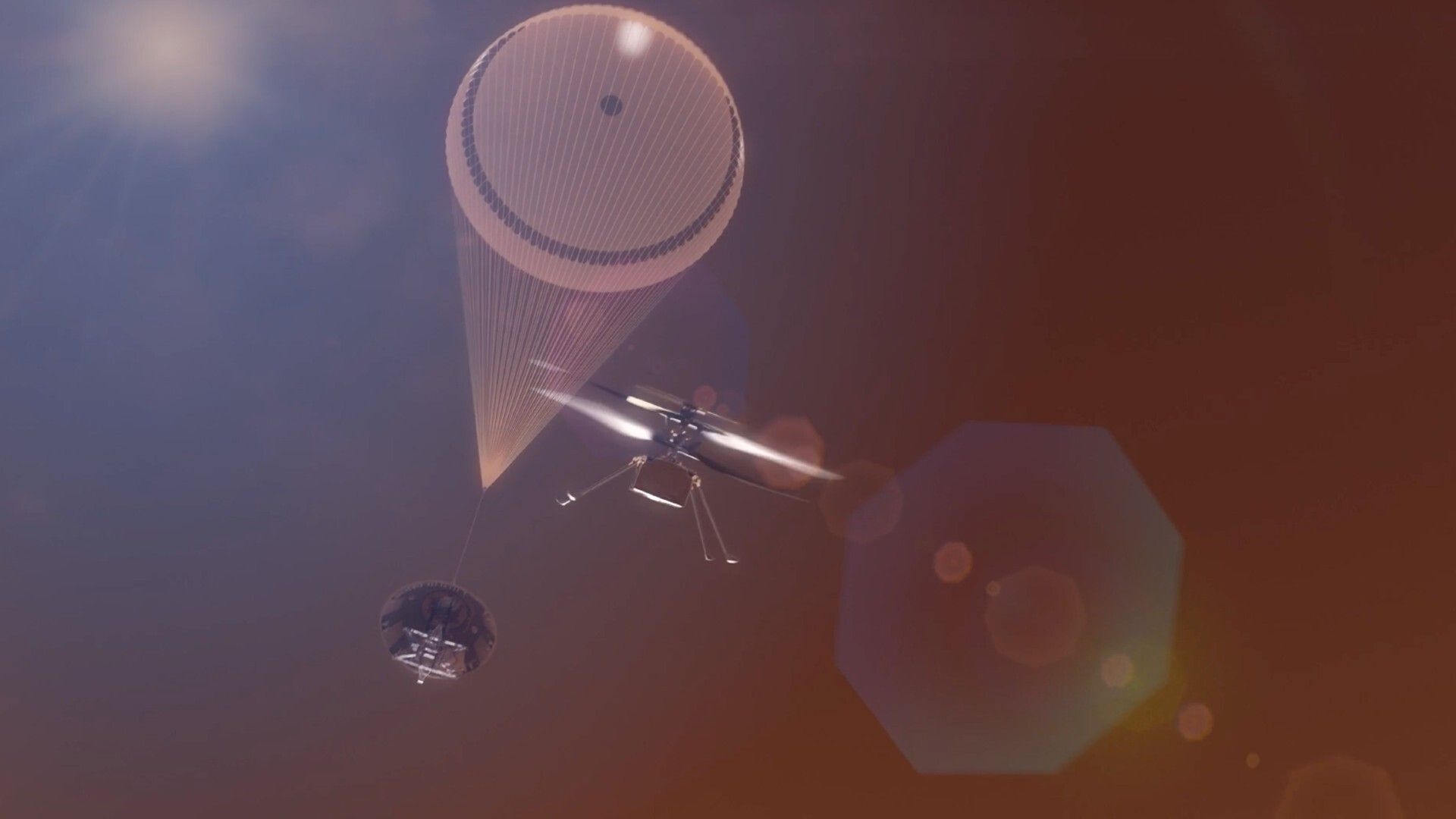
Building on Ingenuity's success, NASA plans to launch Skyfall in 2028, a mission carrying three nuclear-powered helicopters equipped with scientific instruments to map subsurface ice and analyze weather patterns. The mission will also demonstrate how aerial vehicles can identify safe landing zones for future human missions. NASA's Jet Propulsion Laboratory is exploring even larger, more capable Mars helicopters that could conduct expanded scientific work, marking the culmination of a fifty-year progression from Viking's ground-based approach to exploration of the Martian skies.