
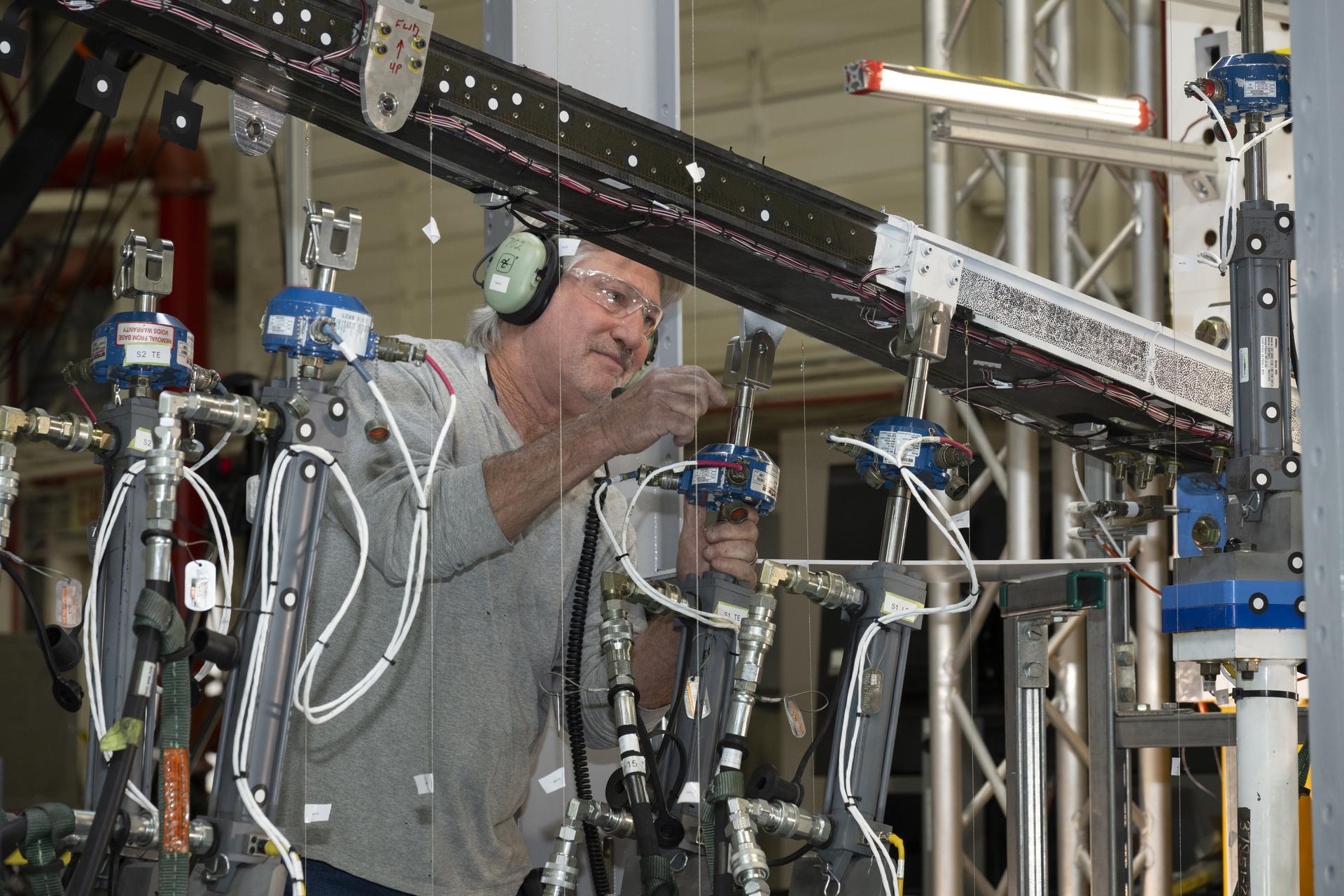
NASA researchers completed structural testing of SWEET-15, a 15-foot composite wing featuring a truss-braced design intended for future fuel-efficient aircraft. The wing successfully withstood expected in-flight loads during months of controlled testing at NASA's Armstrong Flight Research Center, with strain sensors confirming predictions from computer models. Engineers then deliberately pushed the wing beyond its design limits to failure, which occurred at roughly 127% of the maximum expected load, providing critical data on how joints connecting the wing to its support struts perform under extreme stress.
The wing design combines five advanced composite manufacturing technologies developed at NASA's Langley Research Center, including robotic assembly methods aimed at producing lighter and stronger structures. The test-to-failure phase marked the first time a representative composite truss-braced wing configuration underwent this type of evaluation, offering insights that will inform future airframe designs under NASA's Subsonic Flight Demonstrator project. Researchers are now analyzing the collected data to support development of more efficient aviation technologies.