
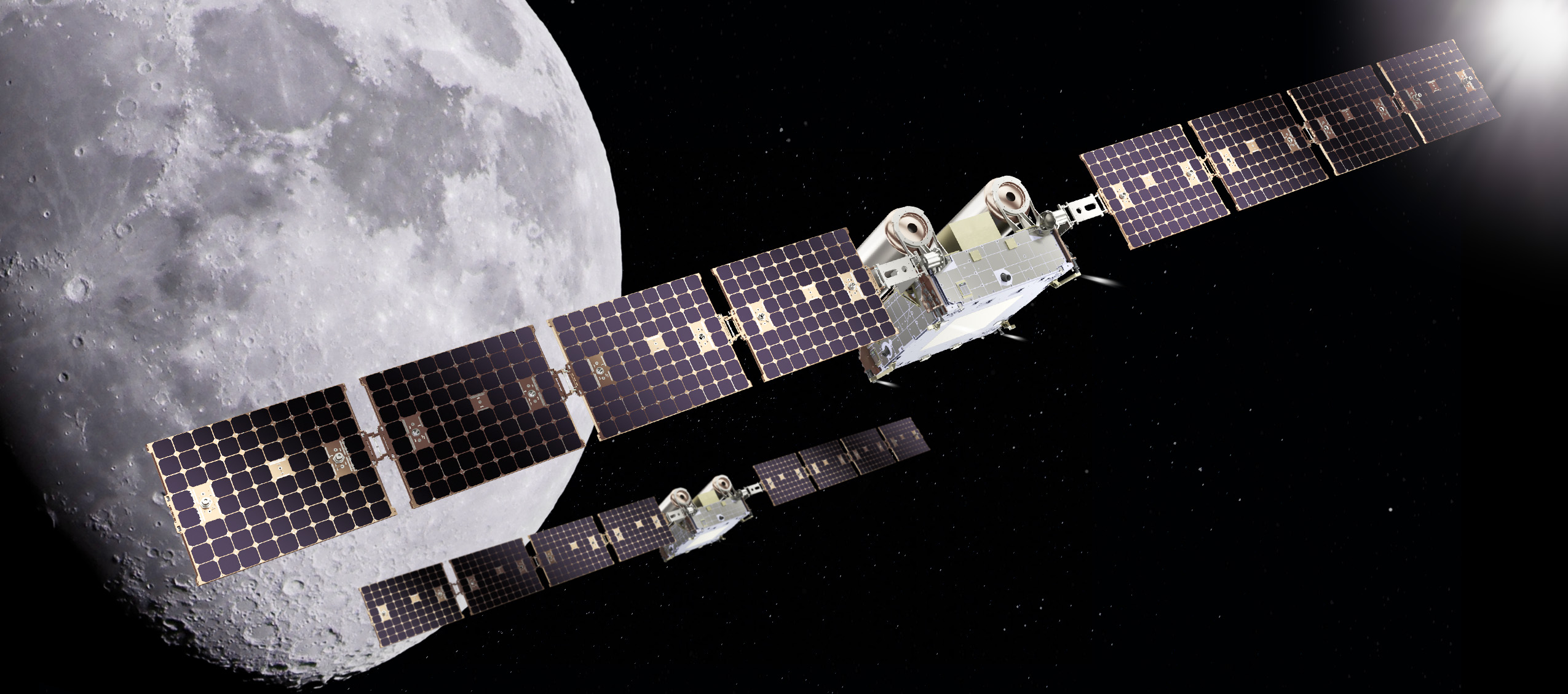
NASA awarded Advanced Space a contract for CAPSTONE 02, a mission to demonstrate rendezvous, proximity operations, autonomous navigation, and cislunar communications at the Moon. The effort builds on the original CAPSTONE mission, which successfully validated navigation and communications in a near rectilinear halo orbit. CAPSTONE 02 targets launch in 2027 and will use two identical 400-kilogram spacecraft from Terran Orbital to test technologies needed for Artemis lunar operations and a permanent Moon Base.
The two spacecraft will conduct a series of rendezvous and formation-flying maneuvers in lunar orbit, with each able to switch between chaser and target roles. The mission will employ ground tracking, optical sensors, and celestial navigation to test relative navigation under three-body orbital dynamics -- conditions that cannot be fully recreated on Earth. These techniques are designed to support future docking of Orion with lunar landers in cislunar orbit for crew transfers to the surface.
CAPSTONE 02 will serve as a testbed for three NASA-developed navigation software suites and will further mature the Cislunar Autonomous Positioning System, which determines spacecraft position relative to other spacecraft without relying on Earth-based tracking. An optical imaging payload from Lawrence Livermore National Laboratory will support navigation demonstrations and capture lunar imagery. The spacecraft are designed to automate routine navigation tasks and reduce dependence on traditional space-to-ground data links.
NASA's Human Spaceflight Mission Directorate funds the mission with support from the Research and Technology Mission Directorate. The program demonstrates a scalable, cost-effective mission model for rapid deployment and is managed by NASA's Ames Research Center. According to Sean Fuller, Moon Base CAPSTONE manager, the mission lays groundwork for lunar infrastructure and commercial services supporting Artemis and deep space exploration.