
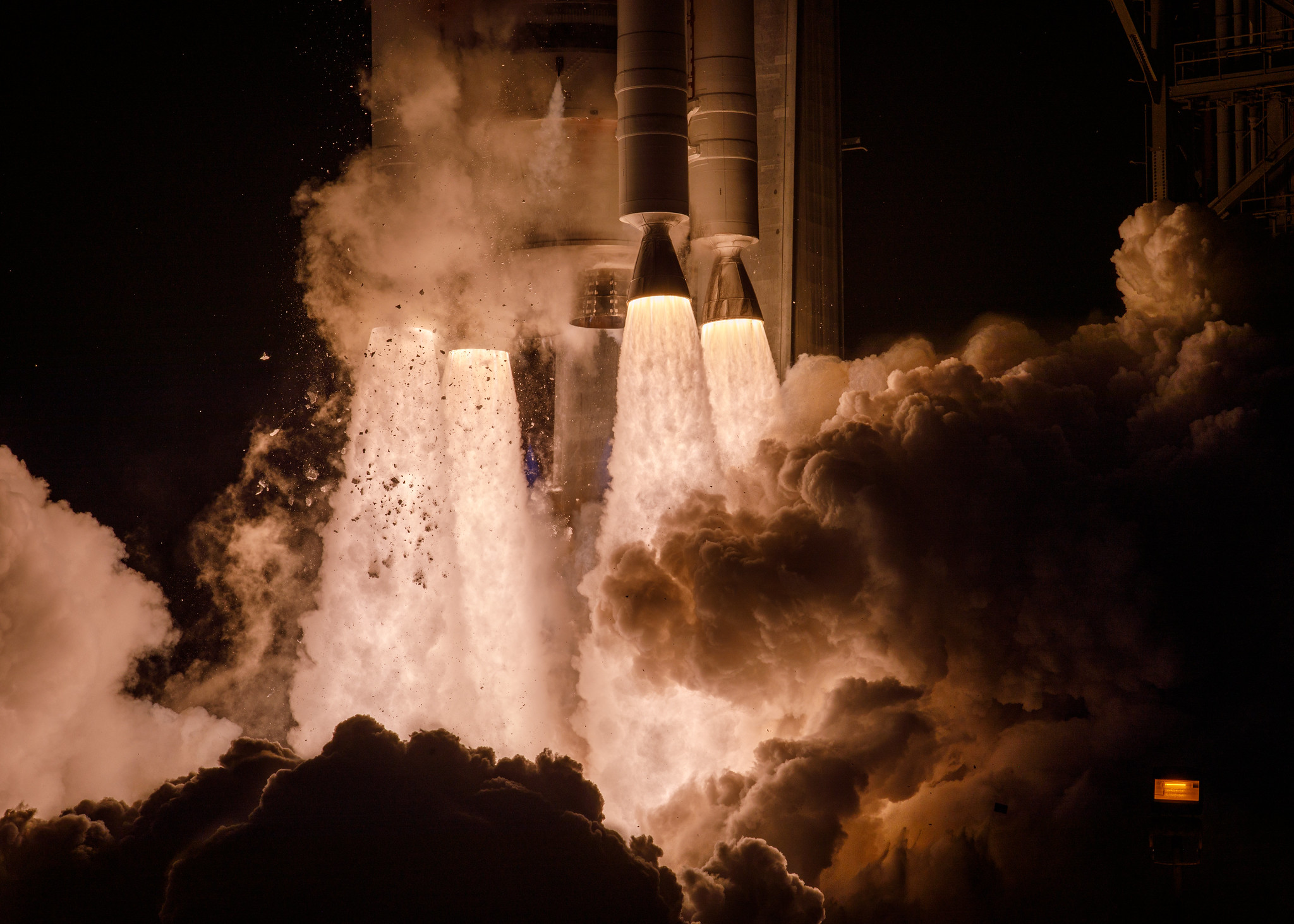
Northrop Grumman took a $91 million charge in the second quarter related to its GEM 63XL solid rocket motor program, adding to a $71 million charge from the first quarter. The motors power the solid rocket boosters on United Launch Alliance's Vulcan Centaur rocket, which experienced a "significant performance anomaly" during a February launch. While the rocket still reached its planned orbit, the incident has grounded Vulcan flights, and neither Northrop nor ULA has publicly disclosed what caused the problem.
Northrop says it identified the root cause and redesigned a motor component, which passed a static-fire test. CEO Kathy Warden stated the company expects to begin delivering the redesigned motors by year's end, though she did not specify which components changed or provide details on the anomaly itself. Vulcan has not launched since February, and the U.S. Space Force indicated in April it was considering resuming flights without solid rocket boosters, but no formal plans have been announced.
Despite the financial hits, Northrop's leadership expressed confidence the GEM 63XL program would improve. CFO John Greene cited higher volumes on national security space programs and expected better performance on the motor program to drive growth in the space division during the second half of the year. The company did not quantify how much further losses the program might incur before the redesigned motors enter service.
Northrop also reported lower performance on its Habitation and Logistics Outpost (HALO) lunar module program in the second quarter. NASA scrapped the lunar Gateway concept earlier this year, putting HALO's original mission in jeopardy. Warden said Northrop is restructuring the contract with NASA to redirect the technology toward future lunar plans, which will reduce revenue this year but extend the work over a longer timeline.