
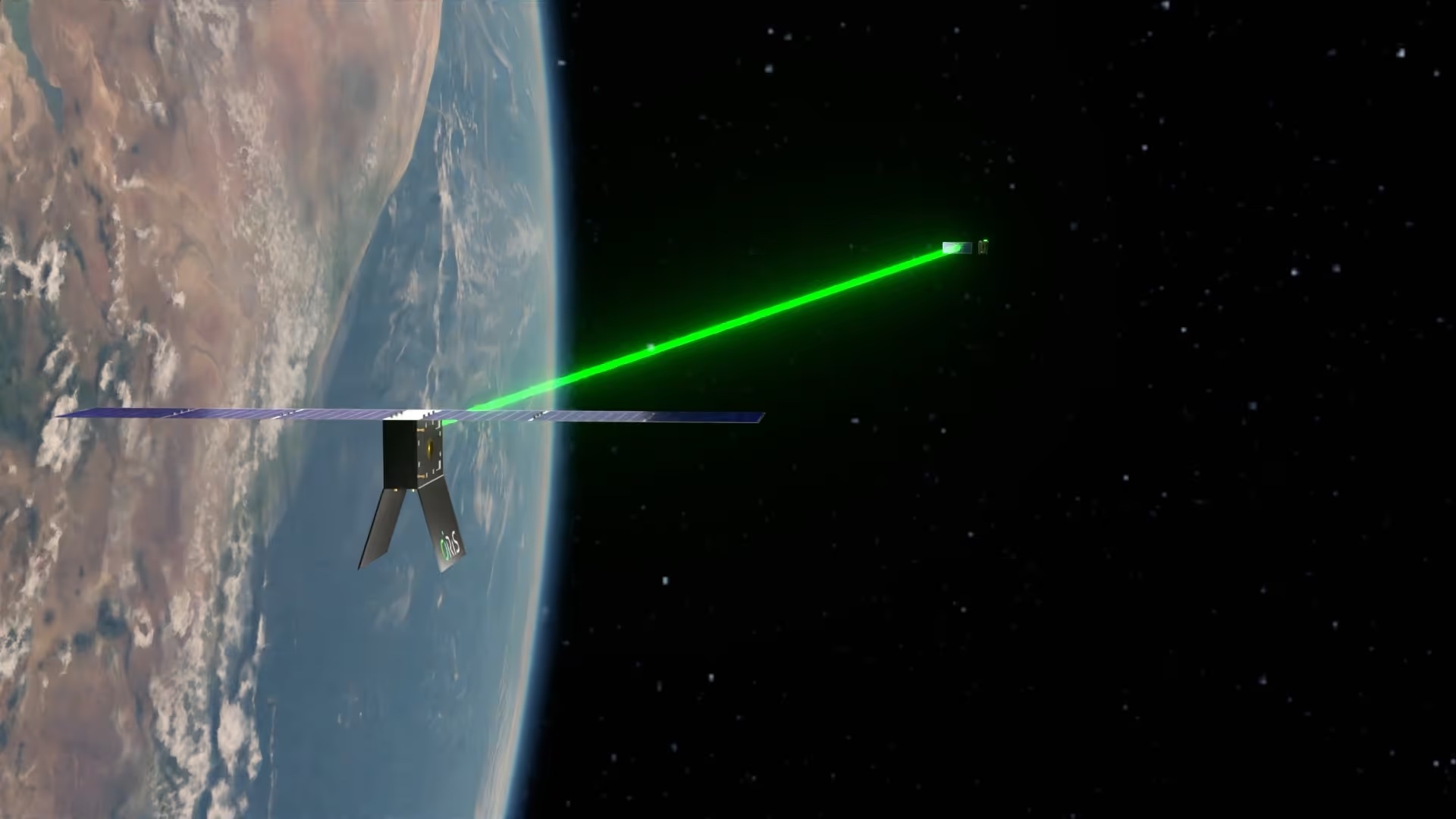
ORiS, a Turin-based startup, raised 5 million euros to develop laser-based wireless power-beaming technology for satellites. The 4.5 million euro pre-seed round was led by Earlybird and co-led by Pitchdrive, with an additional 500,000 euro grant from an Italian regional startup program. Unlike competitors using concentrated sunlight, ORiS plans to transmit power via lasers to satellites' existing solar arrays without modification, aiming to reduce reliance on large onboard batteries and solar panels.
The company has completed ground tests transmitting power to drones at 100-meter range. ORiS plans two demonstration missions next year: a 10-meter laser power transmission test in Q1 2027 with Dcubed, and a second mission with an undisclosed partner. A third mission with an unnamed customer that operates satellite hosting payloads will follow, targeting full service feasibility demonstration.
ORiS's approach differs from competitor Star Catcher Industries, which raised $65 million in May to focus sunlight onto customer satellites. Villa acknowledged laser systems offer compactness but may be costlier to launch than Star Catcher's lens-and-mirror approach. ORiS targets supporting many smaller satellites via a network of tens to hundreds of its own craft, while Star Catcher emphasizes orbital data centers. The Defense Innovation Unit recently solicited commercial power-beaming technologies for military deployment by decade's end.
The company's terrestrial laser power system, called LOONA, has attracted separate interest and NATO support through the DIANA program. Villa said ORiS expects to enter that ground-based market by year's end. Long-term, the startup is exploring applications for lunar exploration to address the 14-day lunar night when solar power is unavailable, though Villa characterized this as early-stage planning.