
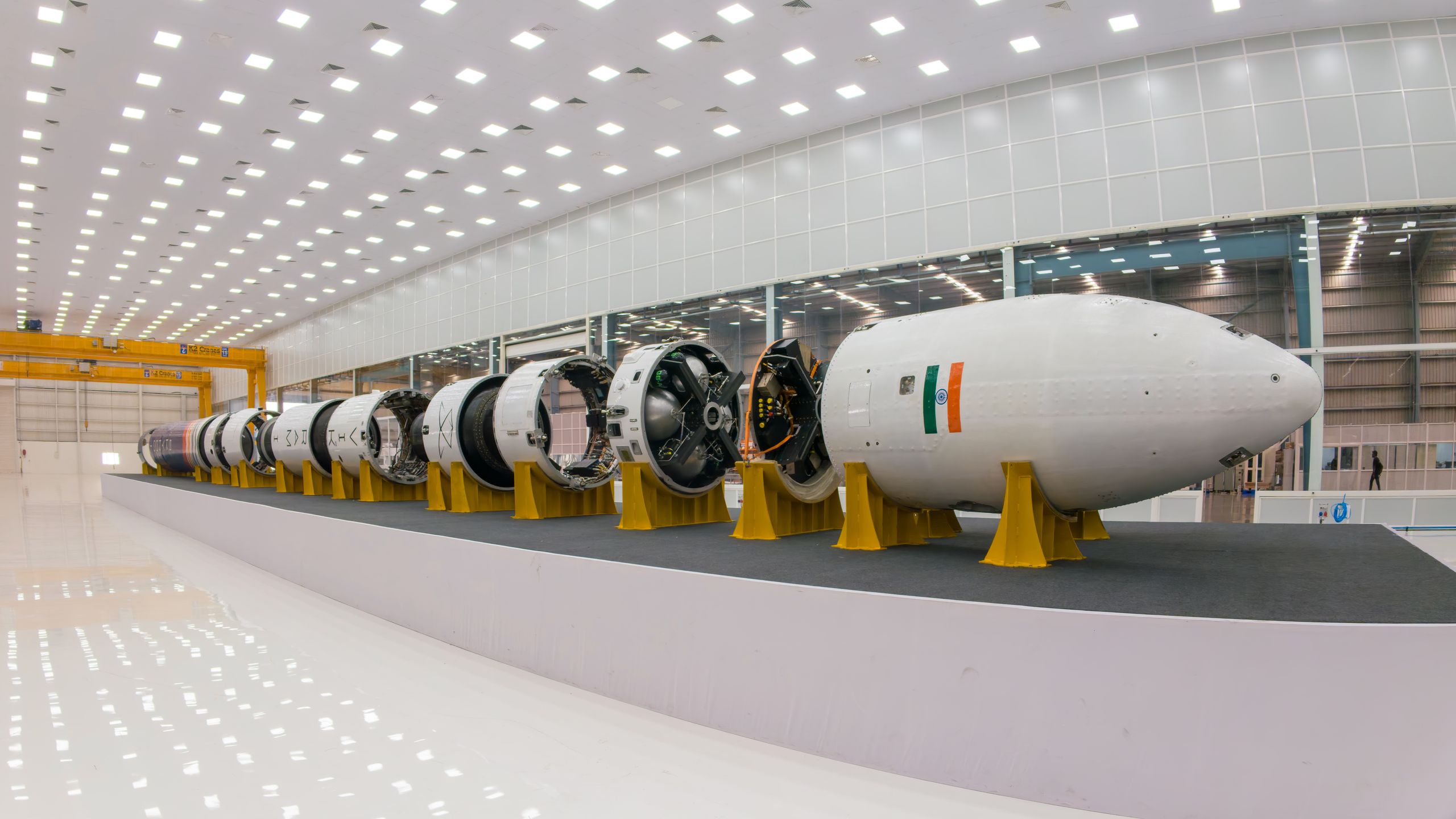
Skyroot Aerospace's Vikram-1 rocket stands on the launch pad at India's Satish Dhawan Space Centre, preparing for its orbital debut during a July 12 through August 4 launch window. If successful, the mission -- named Aagaman and carrying payloads from Indian startups, a German tech company, and symbolic art pieces -- would mark the first time a private Indian company has launched satellites to orbit. The three-stage rocket uses solid propulsion for its lower stages and a restartable liquid-fueled upper stage capable of deploying multiple payloads to different orbits at 280 miles altitude.
Vikram-1 builds on Skyroot's 2022 suborbital Vikram-S flight, from which about 80% of current technologies were validated. The company, founded in 2018 by former Indian Space Research Organisation engineers, aims to offer dedicated launches for small satellites -- a model Skyroot CEO Pawan Kumar Chandana compares to booking a cab rather than taking a train. Aagaman is the first of three development flights before commercial operations begin; Skyroot plans to scale to one orbital launch per month and eventually develop larger reusable vehicles as India's space sector grows from near-zero private activity in 2018 to over 400 startups today.