
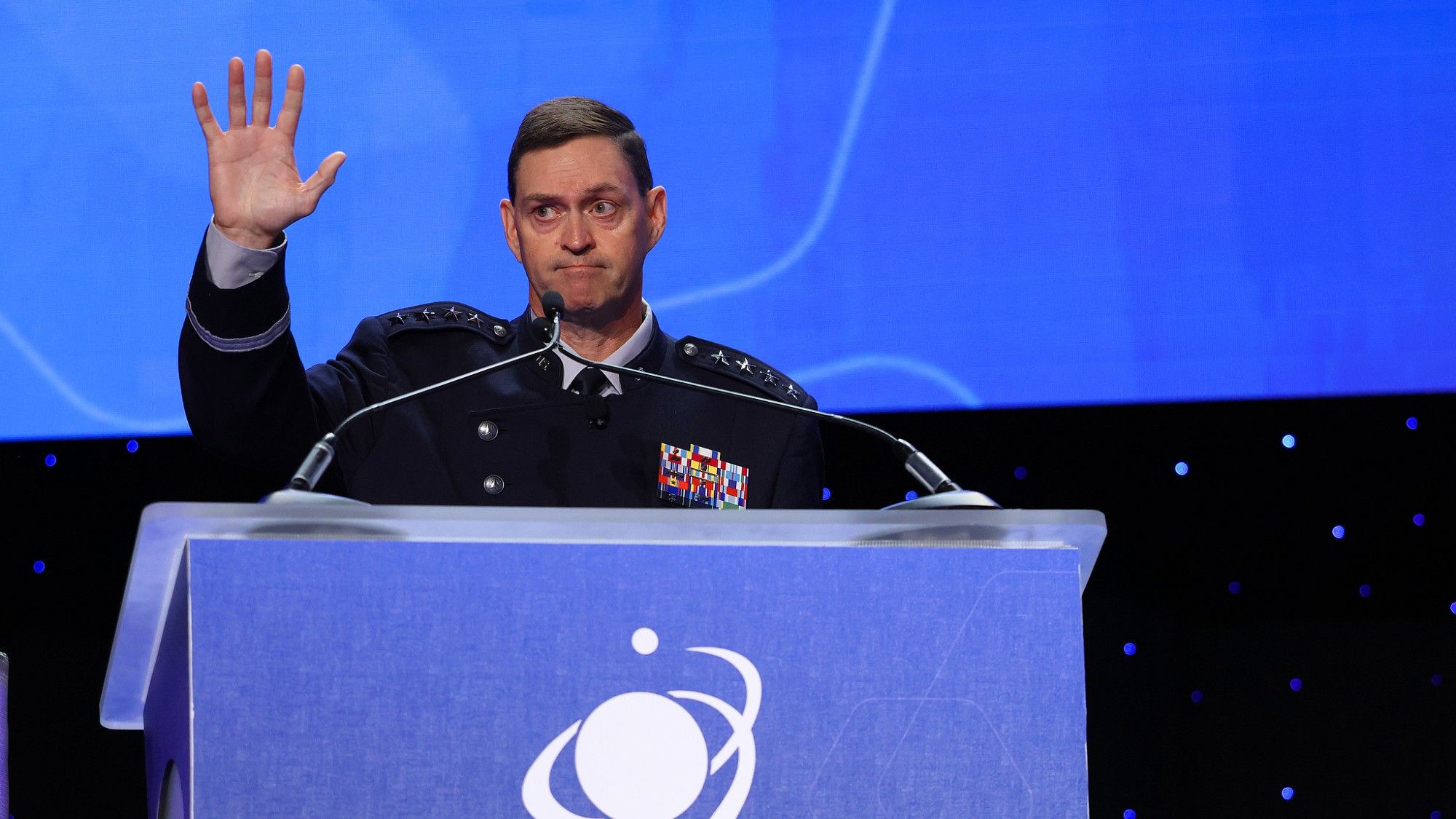
Gen. Chance Saltzman, the outgoing Chief of Space Operations, warned at the Global Air and Space Chiefs Conference on July 15 that a conflict extending into space would ensnare all spacefaring nations regardless of their involvement. Unlike combat zones on Earth, orbital mechanics would place every space-based asset into a war zone, he said. The warning reflects years of military planning for potential space conflict and highlights a critical vulnerability: Earth orbit contains thousands of crowded spacecraft with limited available orbital real estate.
The core risk Saltzman outlined centers on debris generation. When Russia destroyed a satellite with a missile in 2022, the resulting debris field persisted in orbit and forced the International Space Station to perform multiple avoidance maneuvers. Even a single satellite destroyed during a space conflict could trigger cascading debris creation, rendering parts of Earth orbit unusable -- a scenario military planners call Kessler syndrome.
Despite the severity of this threat, Saltzman stressed that shared consequences should drive shared responsibility. He called for international cooperation across the space domain, framing space security as "the ultimate team sport" that no single nation can secure alone. He emphasized that deterrence of space conflict should become a goal for all spacefaring nations, not just military competitors.
Saltzman retires in August 2026 after serving as the Space Force's second Chief of Space Operations since 2022. President Trump has nominated Lt. Gen. Douglas A. Schiess to replace him. During his recent confirmation hearing, Schiess defended the Space Force's $71 billion budget request, citing the need to counter China's military space development.