
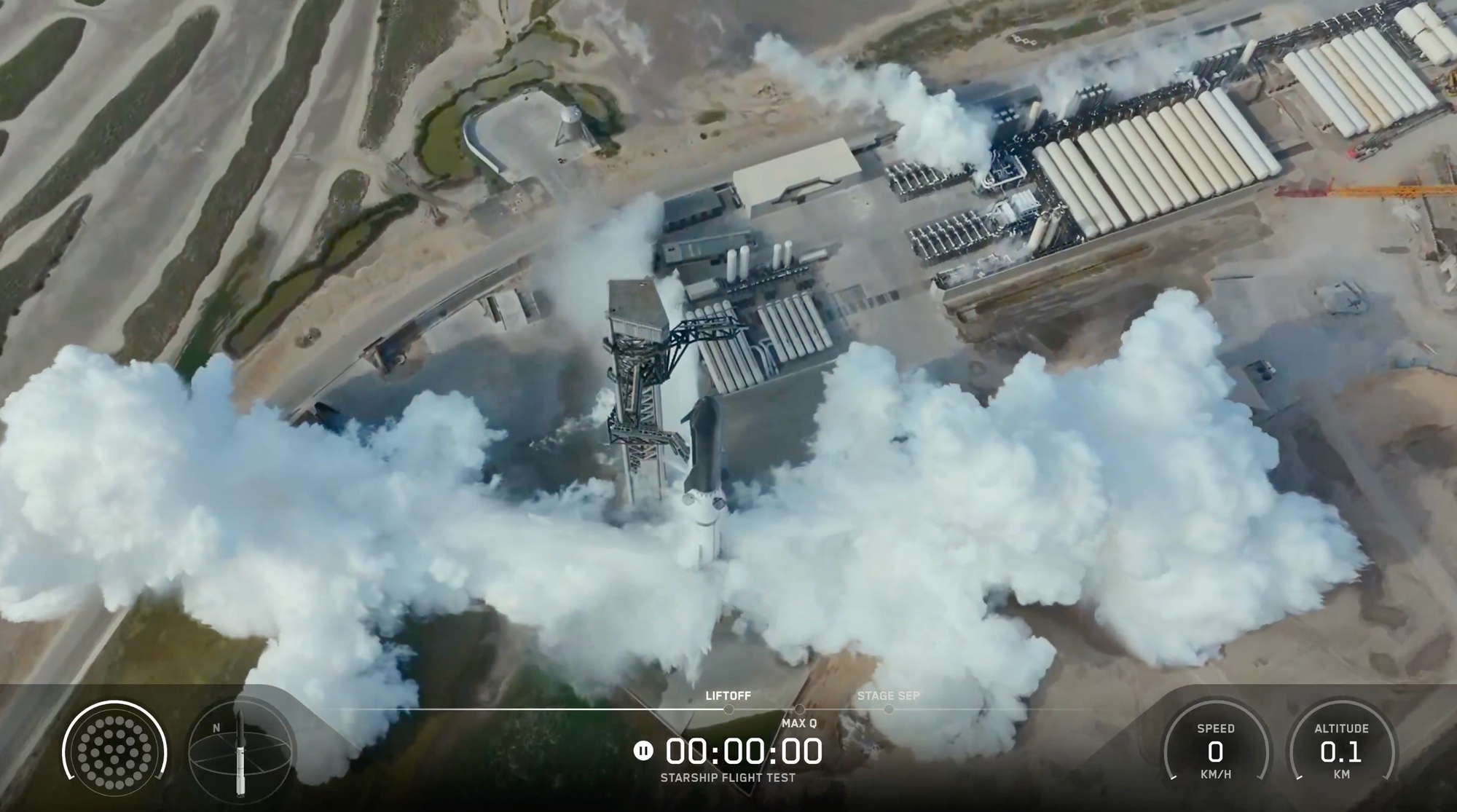
SpaceX aborted the July 16 launch of Starship Flight 13 from Starbase, Texas when several Raptor engines in the Super Heavy booster failed to ignite. The abort occurred moments after engine ignition, with Elon Musk stating via social media that the company would remove and replace two engines before the next attempt, likely in early the following week. Flight 13 is the second test of the upgraded Starship V3 and was planned as a suborbital mission incorporating lessons from Flight 12 in May, which saw the booster lose controlled splashdown capability and one upper-stage engine fail during ascent.
A key distinction for Flight 13 is its payload: 20 functioning Starlink V3 satellites scheduled for deployment and testing in space rather than mass simulators used on previous flights. The satellites would undergo about 20 minutes of tests including solar array deployment, antenna activation, and communications checks before reentering. Each Starlink V3 satellite offers 1 terabit per second of downlink capacity, ten times better than existing constellation members, along with doubled power generation from larger solar arrays and upgraded phased-array antennas operating across multiple bands. The abort marked the first Starship launch attempt since SpaceX's June 12 IPO and triggered a stock price dip from $131.11 to near $125 within minutes of the announcement.