
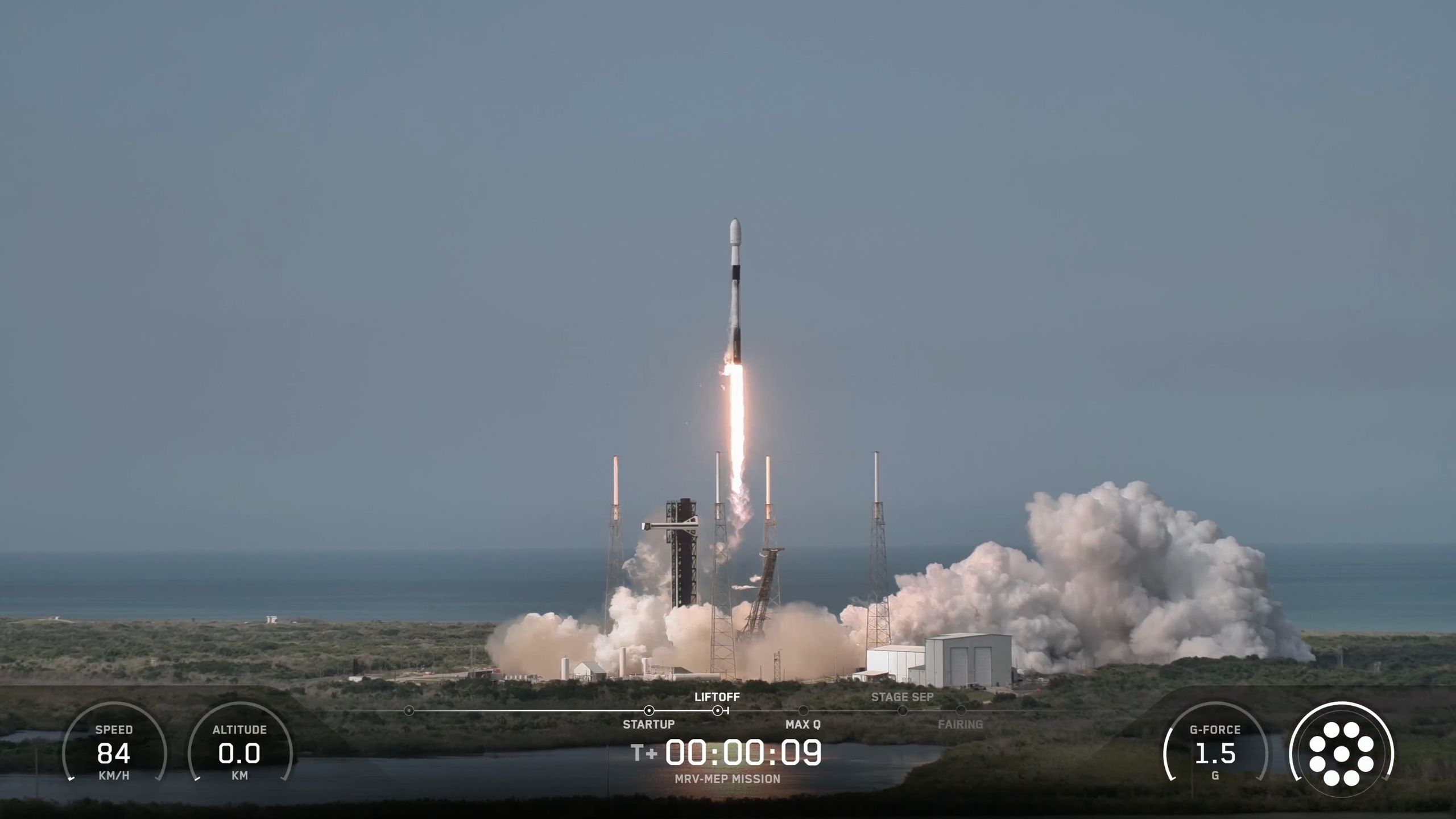
SpaceX launched the MRV-MEV mission on July 21 from Cape Canaveral, sending a Mission Robotic Vehicle and three Mission Extension Pods toward geostationary orbit. SpaceLogistics, a Northrop Grumman subsidiary, will operate the spacecraft to extend the operational lives of communications, spy, and weather satellites in GEO. This represents the first deployment of MEPs -- small propulsion units designed to dock with aging satellites and provide up to eight years of additional service life.
The MRV is equipped with two 10-foot robotic arms built by the U.S. Naval Research Laboratory. Each MEP can extend the life of a typical 2,000 kg GEO satellite using electric propulsion for orbit control and momentum management. The spacecraft will reach GEO separately, with the MRV then ferrying each MEP to its assigned target satellite. Optus booked one MEP, while Intelsat contracted for the other two.
Beyond installing MEPs, the MRV can relocate, inspect, repair, and upgrade satellites in orbit. It includes a Passive Refueling Module, the first refueling interface standard approved by the U.S. Space Force, allowing the vehicle to be refueled on orbit and support multiple missions over time. Northrop Grumman previously operated MEV-1 and MEV-2, which docked with Intelsat satellites in 2020 and 2021 respectively, though those earlier missions worked differently -- each was a single servicing craft rather than a modular system.
This was the 32nd and final flight for the Falcon 9 first-stage booster used in the mission, which had previously launched cargo and internet satellites. SpaceX did not attempt a first-stage landing due to the additional performance needed to reach geosynchronous transfer orbit. The launch was SpaceX's second of the day, following a Starlink deployment from California earlier that morning.