
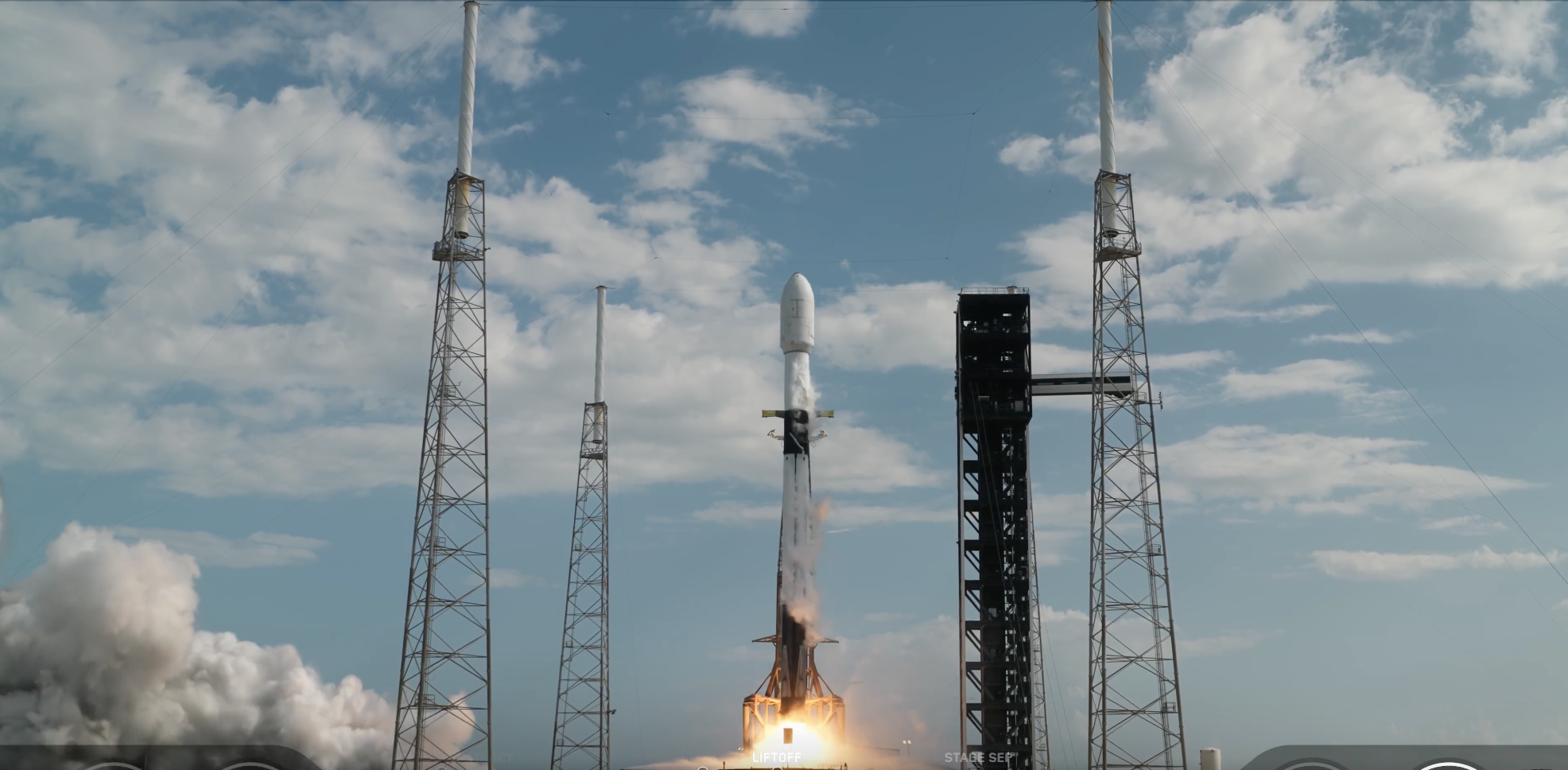
SpaceX launched a Northrop Grumman robotic spacecraft on July 21 designed to extend the operational lives of aging satellites in geostationary orbit by installing propulsion modules. A Falcon 9 rocket lifted off from Cape Canaveral carrying a Mission Robotic Vehicle (MRV) and three Mission Extension Pods toward geosynchronous transfer orbit. The MRV differs from Northrop's earlier life-extension vehicles by servicing multiple satellites rather than remaining attached to a single customer for years. The mission matters because it demonstrates a scalable approach to satellite servicing that could extend the utility of expensive GEO assets.
The MRV is designed to operate for about 15 years, retrieving each pod in sequence and using two robotic arms to attach it to a customer satellite's structural ring. The pods themselves carry electric thrusters that help maintain orbital position and attitude control without refueling the host spacecraft. Northrop estimates a pod can extend the useful life of a typical geostationary communications satellite by roughly six years. The first three pods are contracted to Intelsat (two pods) and Australia's Optus (one pod), with the MRV set to install them sequentially after reaching GEO.
The MRV program originated from DARPA's Robotic Servicing of Geosynchronous Satellites initiative launched in 2016. DARPA funded development of the robotic payload including the arms, while Northrop financed the spacecraft and commercialization. Northrop's SpaceLogistics subsidiary has already conducted two previous life-extension missions using earlier MEV vehicles, completing three total dockings with Intelsat and Optus satellites between 2020 and 2025.
The U.S. Space Force has indicated interest in accessing MRV services once operational, though Northrop has not disclosed any government contracts yet. SpaceX did not recover the Falcon 9 booster on this launch, ending its service after a record 32 flights because the payload required the rocket's full performance. Northrop plans to launch additional Mission Extension Pods for future customers while keeping the MRV in orbit to service them.