
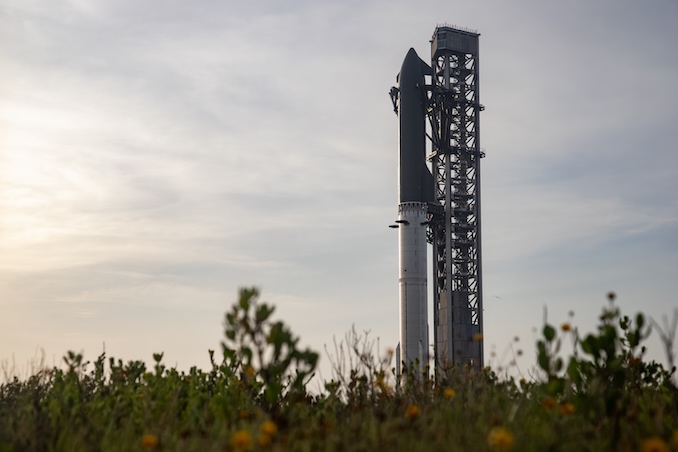
SpaceX is preparing for a second launch attempt of Starship Flight 13 on July 24 after scrubbing a July 16 liftoff due to four engines that failed to ignite during the ignition sequence. The booster and upper stage underwent several days of work following the abort -- SpaceX replaced and tested multiple Raptor engines on the Super Heavy booster before stacking the vehicles again at Pad 2. Flight 13 carries significance as the first deployment of production Starlink V3 satellites from a Starship upper stage, plus a planned engine relight and boostback burn attempt that have presented challenges on recent flights.
SpaceX plans to deploy 20 production Starlink satellites during the roughly 11-minute deploy sequence. The satellites will remain on Starship's suborbital trajectory and are expected to demise on reentry about 20 minutes after deployment. Following deployment, teams will attempt a Raptor engine relight on the upper stage, and SpaceX has made hardware modifications to the booster to improve engine relight reliability and prevent premature shutdowns seen on previous flights.
The booster faced critical issues during Flight 12 in May when engine startup sequencing caused an off-nominal boostback burn and loss of the booster. Hardware modifications and updates to engine alarms and aborts are intended to address those problems on this flight. The upper stage will also test revised heat shield tile attachments and load-sensing tiles designed to improve data collection on the vehicle's aft section during ascent under increased dynamic pressure.
A July 23 Government Accountability Office report flagged that SpaceX's lunar lander variant of Starship is running more than a year behind schedule on key milestones like the critical design review and uncrewed landing demonstration. The report identified Raptor engine development as a top risk, though NASA officials stated the assessment does not fully reflect programmatic adjustments made to the Artemis campaign in February and March 2026. NASA targets a crewed lunar landing as soon as 2028 using either Starship or Blue Origin's Blue Moon Mark 2 lander.
- Vehicle: Starship Super Heavy (Flight 13)
- Payload: Starlink V3, 20 satellites
- Site: Starbase, Boca Chica, Texas
- Orbit: suborbital
- Window: 2026-07-24T22:45:00Z
- Customer: SpaceX
- Outcome: upcoming