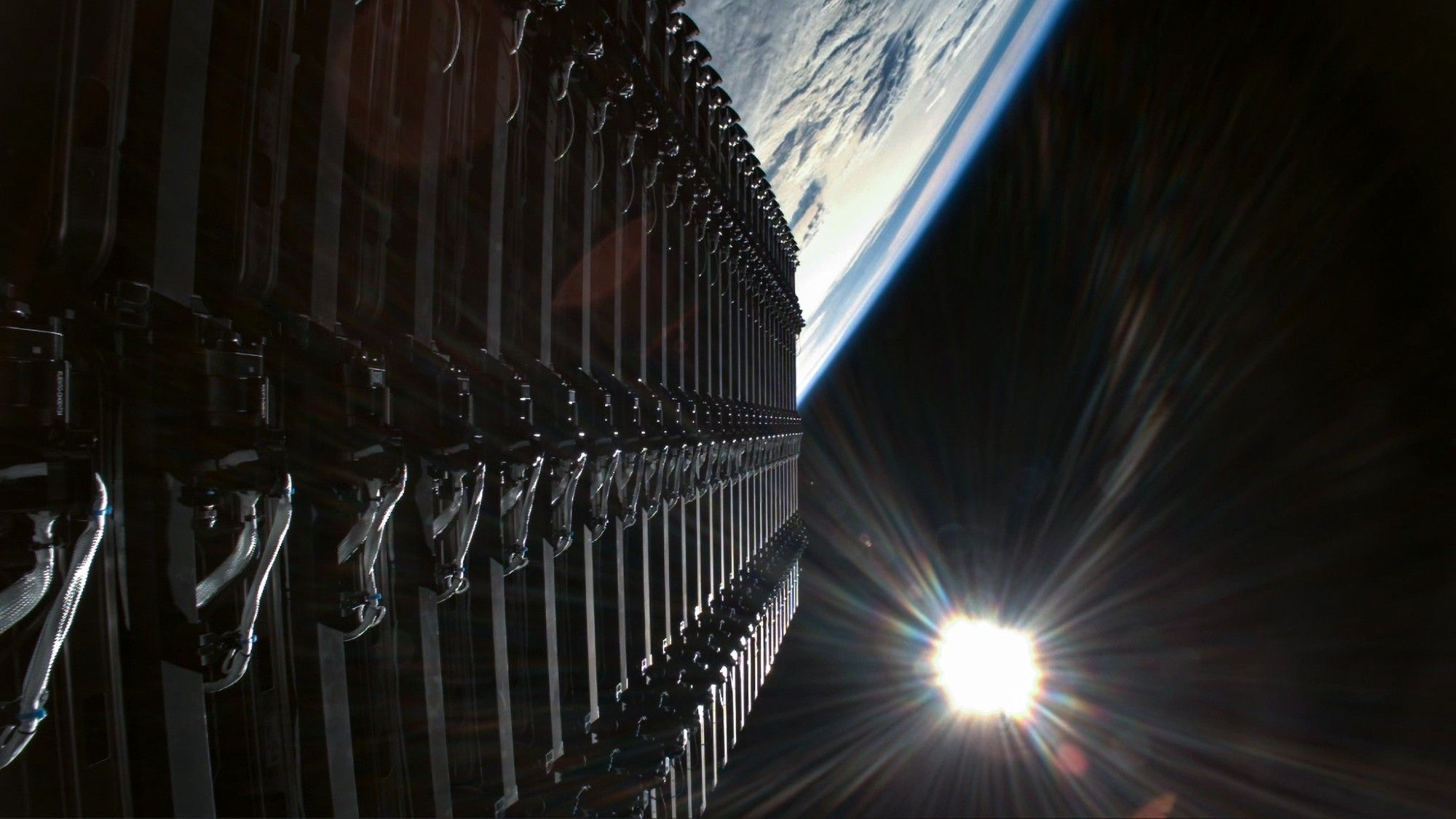
SpaceX's Starlink constellation performed over 355,000 collision avoidance maneuvers in the past year, with each satellite dodging debris and other spacecraft roughly weekly on average, according to the company's latest Federal Communications Commission filing. The maneuvers jumped nearly 60 percent in the most recent six-month reporting period, driven by Starlink's expansion from about 6,000 satellites in 2024 to more than 10,000 as of June 2026. Space sustainability experts warn the trend is unsustainable: as orbital traffic multiplies, the cumulative risk of an actual collision climbs despite individual avoidance maneuvers reducing collision probability to one in a million.
Hugh Lewis, an astronautics professor at the University of Birmingham, projects Starlink alone will hit one million lifetime avoidance maneuvers by June 2027, and could perform that many annually by 2030. The core problem, Lewis and other experts note, is that adding satellites doesn't increase collision pairs linearly -- it multiplies them. SpaceX's autonomous system initiates maneuvers when collision probability exceeds 3 in 10 million, but Tommaso Sgobba of the International Association for the Advancement of Space Safety points out that trajectory predictions carry large uncertainties, meaning satellites frequently dodge "ghosts" and waste fuel. Regulators should require operators to forecast avoidance maneuver needs before approving constellation expansions, Sgobba argues, rather than reacting after the fact.