
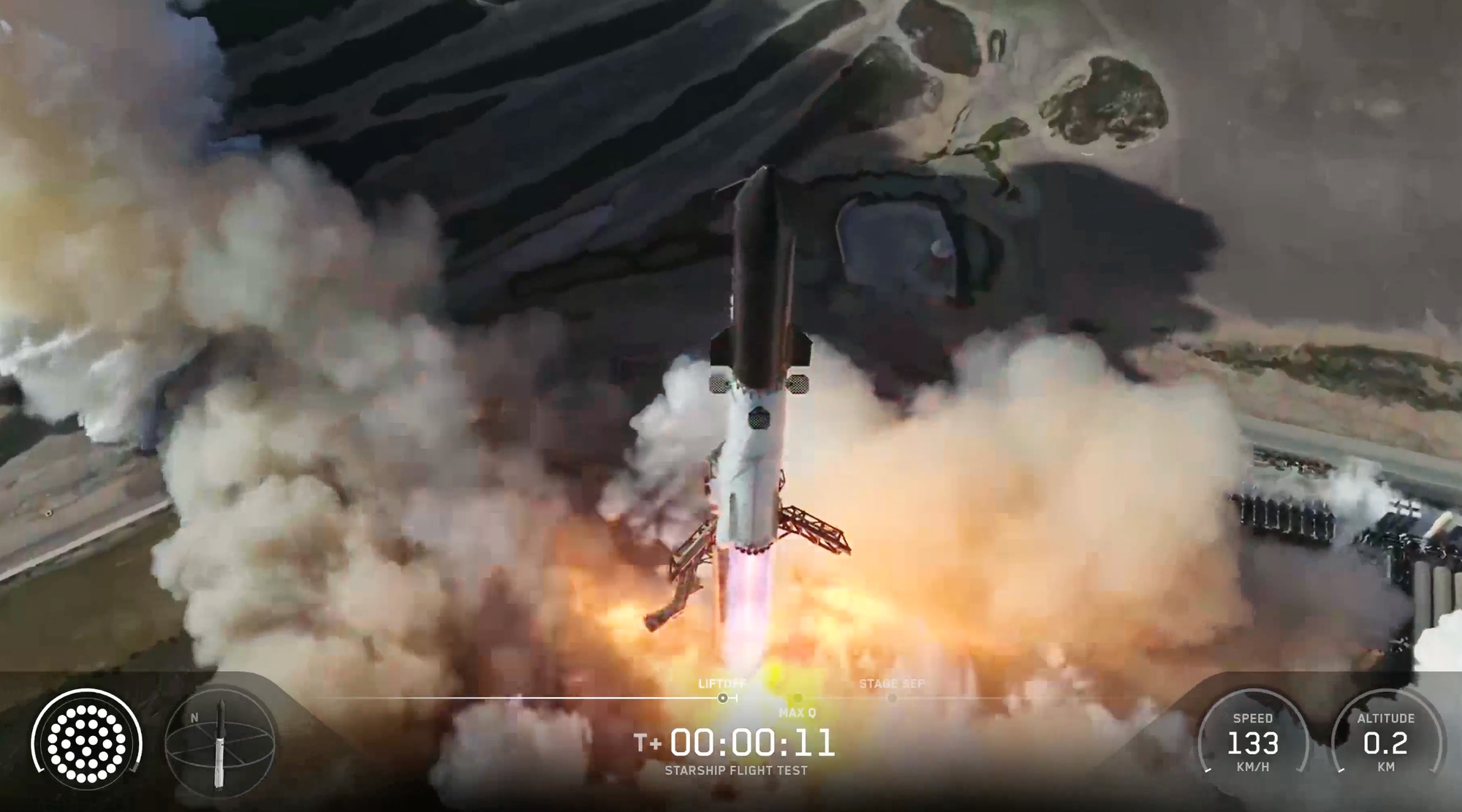
SpaceX launched Starship on its 13th suborbital test flight July 24 from Starbase, Texas, marking the second flight of the upgraded Starship V3 and the first to deploy functioning Starlink satellites. The launch followed a 24-hour delay due to cloudy conditions that would have blocked vehicle imaging. SpaceX used the mission to test fixes addressing engine failures from Flight 12, though the booster's landing burn encountered issues when not all required Raptor engines ignited, resulting in a harder-than-planned splashdown in the Gulf of Mexico.
The upper stage deployed 20 Starlink V3 satellites and conducted roughly 20 minutes of on-orbit tests, including solar array and antenna deployment plus communications checks via radio-frequency and laser links with ground stations and other Starlink satellites. SpaceX performed a Raptor engine relight lasting about 14 seconds, significantly longer than previous attempts. The Starship upper stage completed reentry and soft-splashed in the Indian Ocean roughly 65 minutes after liftoff.
A major milestone came when Starship remained intact after water impact instead of immediately exploding as on previous flights, allowing the vehicle to float and continue transmitting heat shield data. SpaceX noted this represented the first time an intact Starship reached the water, providing valuable engineering information for the thermal protection system development.
The launch came after SpaceX aborted a July 16 attempt immediately after engine ignition when four of 33 booster engines failed to start due to liquid oxygen turbopump problems linked to moisture freezing in the cryogenic environment. SpaceX replaced the affected engines and conducted pad testing before the successful July 24 launch. According to SpaceX President Gwynne Shotwell's June comments, if Flight 13 performed well, the company might attempt its first orbital Starship mission on Flight 14, with a Florida launch following on Flight 15, though SpaceX has not yet disclosed specific plans for upcoming flights.