
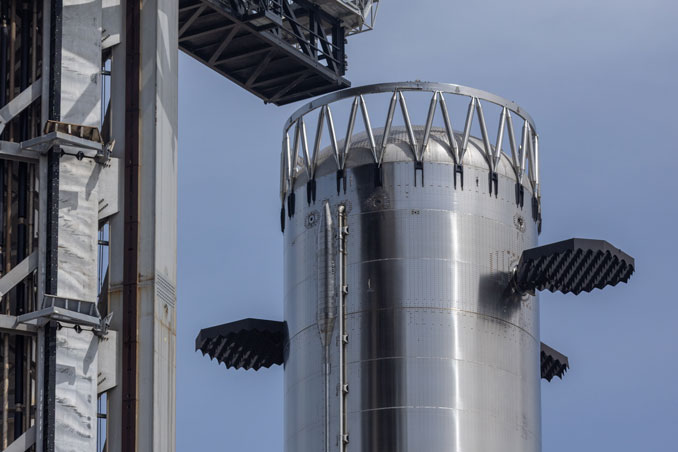
SpaceX will launch Starship Flight 13 on Thursday evening from its Starbase facilities in Texas, deploying 20 production Starlink V3 satellites during the suborbital test flight. The mission uses Booster 20 and Ship 40, both flying for the first time without recovery plans. The satellites will briefly connect to the broader Starlink constellation via high-capacity lasers before demising on reentry about 20 minutes after deployment, marking the first flight test of the long-promised V3 generation.
Flight 13 aims to accomplish goals that eluded the May Flight 12, including a Raptor engine relight during coast phase and a controlled booster landing in the Gulf of Mexico. SpaceX made hardware modifications to address engine startup issues and reliability problems from the previous flight, and will also gather heat shield data with new tile attachments and load-sensing instruments. CEO Gwynne Shotwell told CNBC in June that an orbital launch could come as soon as Flight 14 depending on this mission's results, with a monthly cadence as the target. NASA is counting on SpaceX to reach orbit soon, as a modified Starship V3 is slated to support testing on the Artemis 3 mission next year.
- Vehicle: Starship Flight 13 (Super Heavy Booster 20 / Ship 40)
- Payload: Starlink V3, 20 satellites
- Site: SpaceX Starbase Pad 2, Boca Chica, Texas
- Orbit: suborbital trajectory, 20-minute flight
- Window: 2245
- Customer: SpaceX
- Outcome: upcoming