
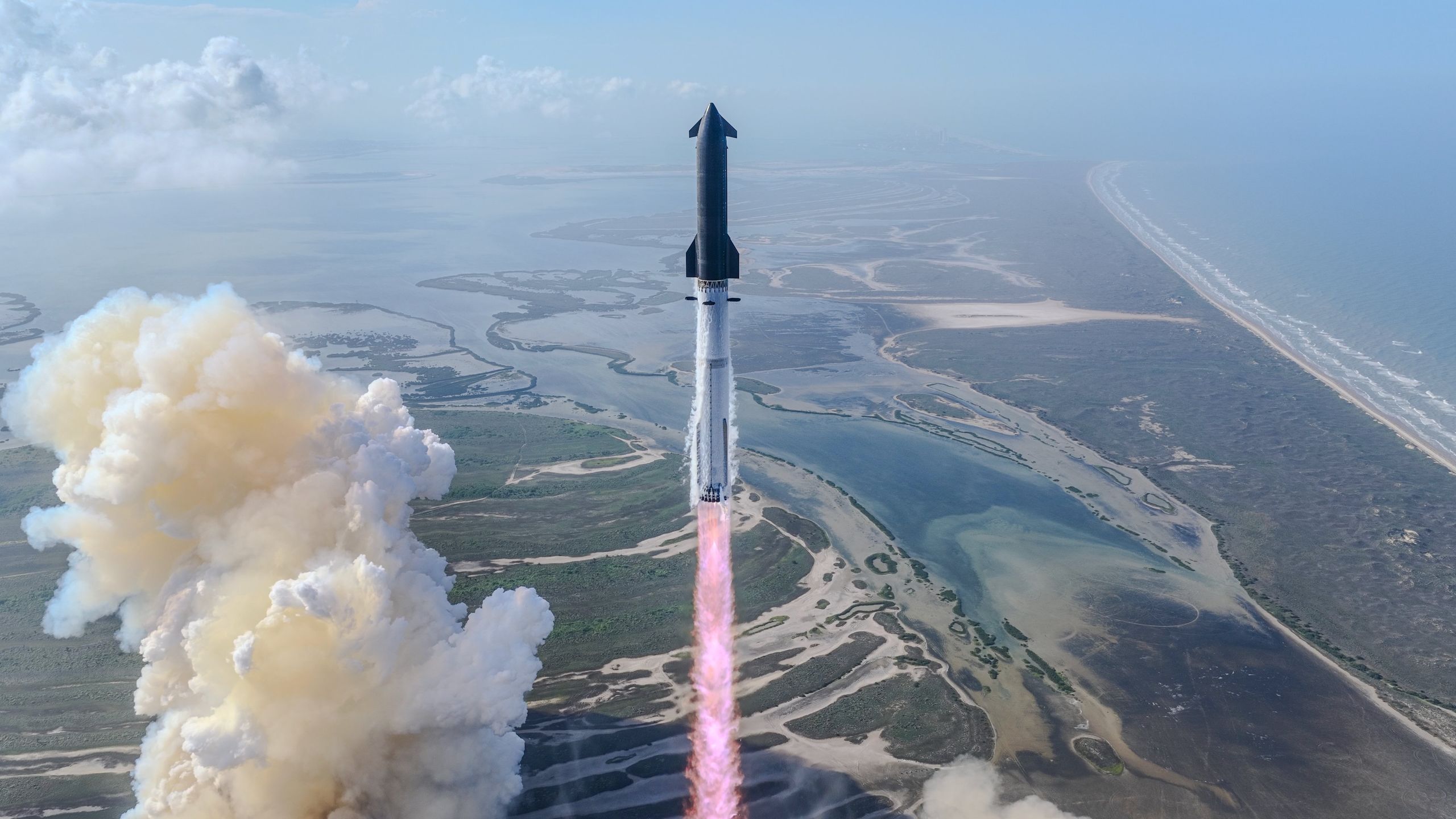
SpaceX's Starship Flight 13 is scheduled to launch July 16 at 6:45 p.m. EDT from Starbase in South Texas, marking the first deployment of 20 Starlink Version 3 satellites. The mission comes after a nearly two-month pause following Flight 12's booster loss in June; the FAA cleared SpaceX to resume operations after reviewing the anomaly and the company's corrective actions. Flight 13 will repeat the primary objectives of Flight 12 while introducing the upgraded satellite payload, with the Super Heavy booster attempting a controlled splashdown in the Gulf of Mexico rather than a tower catch.
All 33 Raptor 3 engines will ignite for liftoff, generating 18 million pounds of thrust. After stage separation at 2.5 minutes, Starship will deploy the 20 Starlink V3 satellites, which are designed to test payload deployment and will intentionally reenter rather than remain in orbit. The upper stage will continue on a suborbital trajectory, collecting data on heat shield performance and flight controls before splashing down in the Indian Ocean roughly an hour after launch. SpaceX continues testing upgrades to propulsion, avionics, and overall vehicle performance as it works toward making Starship an operational launch vehicle.