
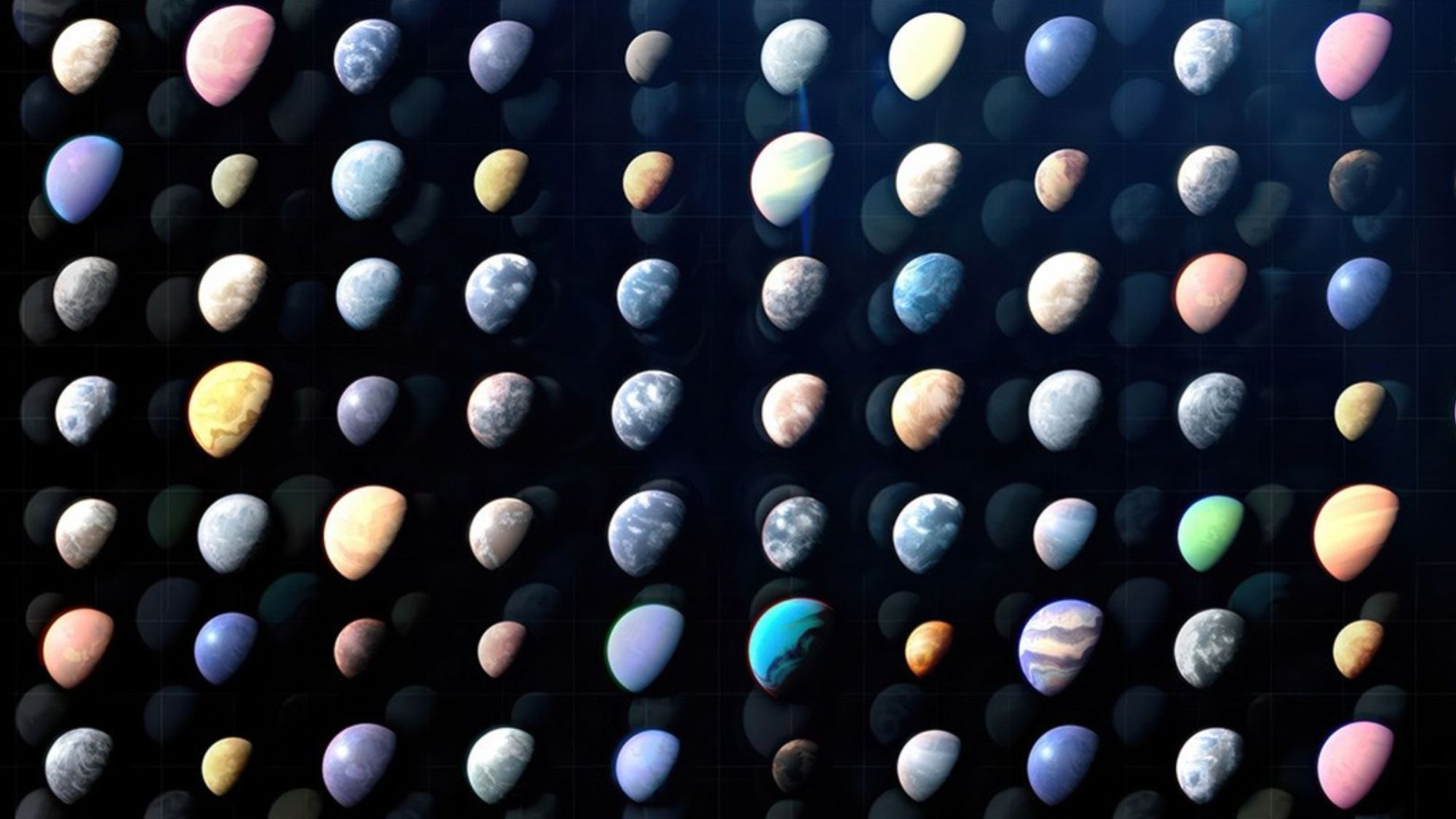
UC Riverside planetary scientist Michelle Hill and colleagues simulated atmospheric retention on rocky exoplanets to help narrow the search for potentially habitable worlds. Their model shows that Earth-like planets need to be at least 80% of Earth's size to maintain an atmosphere for billions of years -- long enough for life to develop. The work addresses a practical problem: astronomers have identified thousands of exoplanets in habitable zones but lack telescope time to observe all of them, so understanding which planets can retain atmospheres helps prioritize targets for biosignature detection.
The team's "Smaller Than Earth Habitability Model" tracks two competing processes over billions of years: how stellar wind and radiation strip gases from a planet's atmosphere, and how volcanic outgassing replaces them. Smaller planets lose this battle because they have weaker gravity and magnetic fields to hold onto gas, thinner mantles that produce less volcanic carbon dioxide, and cooler upper layers that harden faster and cut off eruptions sooner. The model found that planets smaller than 0.8 Earth radii generally cannot maintain stable atmospheres under standard conditions.
Under specific circumstances, however, planets as small as 0.6 Earth radii could hang onto atmospheres. The key factor is carbon abundance: mantles rich in carbon release more carbon dioxide during eruptions, and CO2 is heavy enough to resist atmospheric escape. Planets with relatively smaller cores (and thus thicker mantles) also retain atmospheres better, as do those that start with more radioactive elements to keep the mantle molten, or cooler initial mantles that delay major eruptions until the host star ages and its radiation weakens. These findings remain theoretical but represent realistic planetary compositions.
The research, published in The Planetary Science Journal in June, opens possibilities for even smaller worlds. Hill's team suggests that planets losing their initial atmospheres might regain them through comet and asteroid impacts delivering volatile elements. Future work will expand the model to planets around red dwarfs like TRAPPIST-1 (which hosts at least seven rocky planets with three in the habitable zone) and tidally locked worlds where internal heat remains high.