
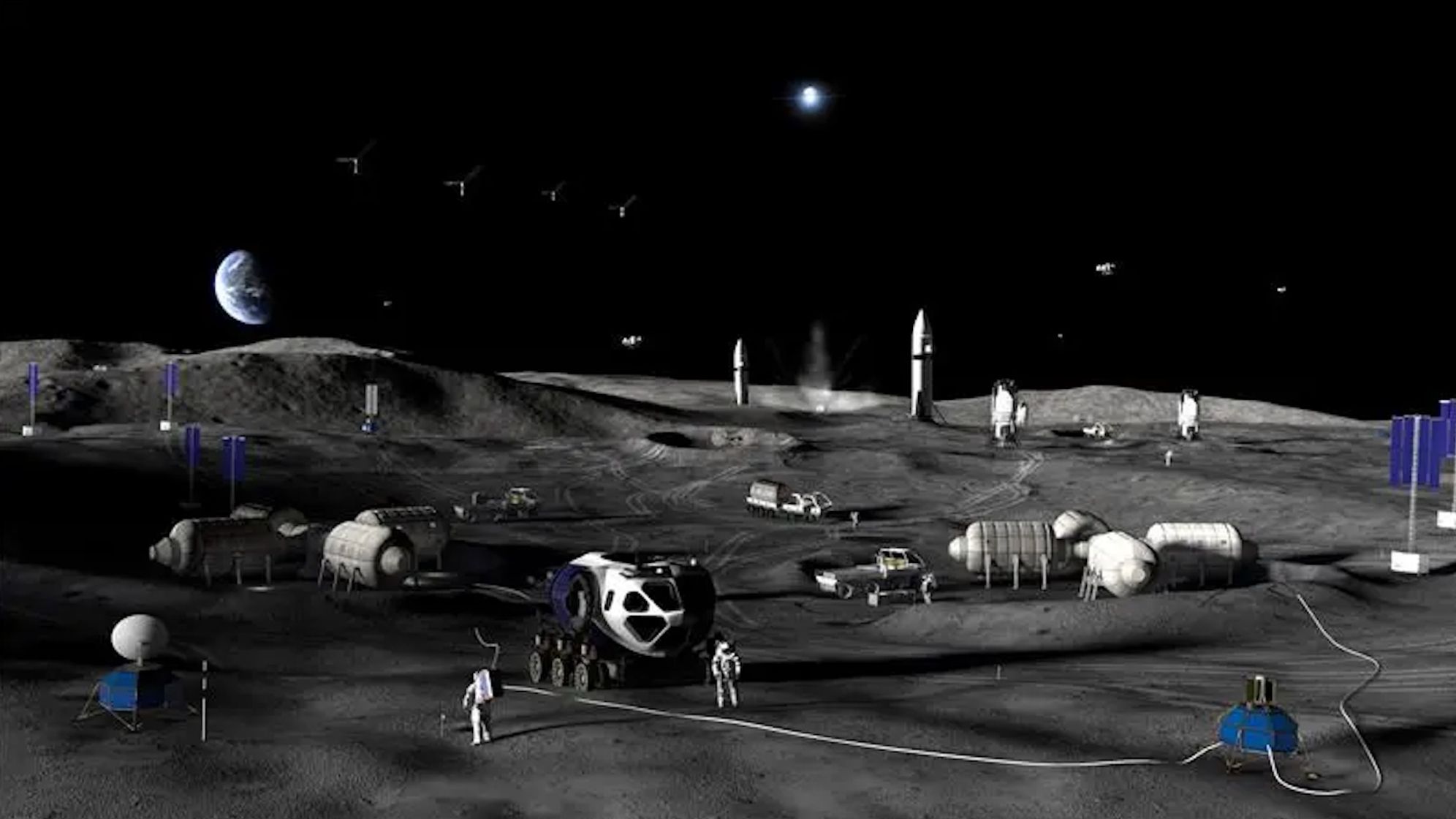
A new study from George Mason University researchers used computational modeling to identify optimal crew configurations for NASA's future lunar base. The team ran agent-based simulations across various mission scenarios to understand how team dynamics, resupply frequency, and environmental hazards affect mission success independent of psychological training. The research, published in PLOS ONE in May, found that mission design fundamentals -- not training alone -- drive productivity in isolated, confined environments like a moon base.
The modeling suggested six astronauts with resupply every two weeks and minimal environmental disruptions represents the highest-probability scenario, while four astronauts with monthly resupply and moderate-to-high environmental hazards represents the worst case. The team's initial three-month scenario with a single resupply showed about 20% task completion, suggesting crews face significant challenges overcoming psychological stressors and disruptions. Lead investigator Anamaria Berea emphasized that success depends on fine-tuning mission duration, resupply intervals, and contingency planning rather than relying primarily on extended training, though she acknowledged training remains part of the overall approach NASA takes with ISS crews and Artemis missions.