
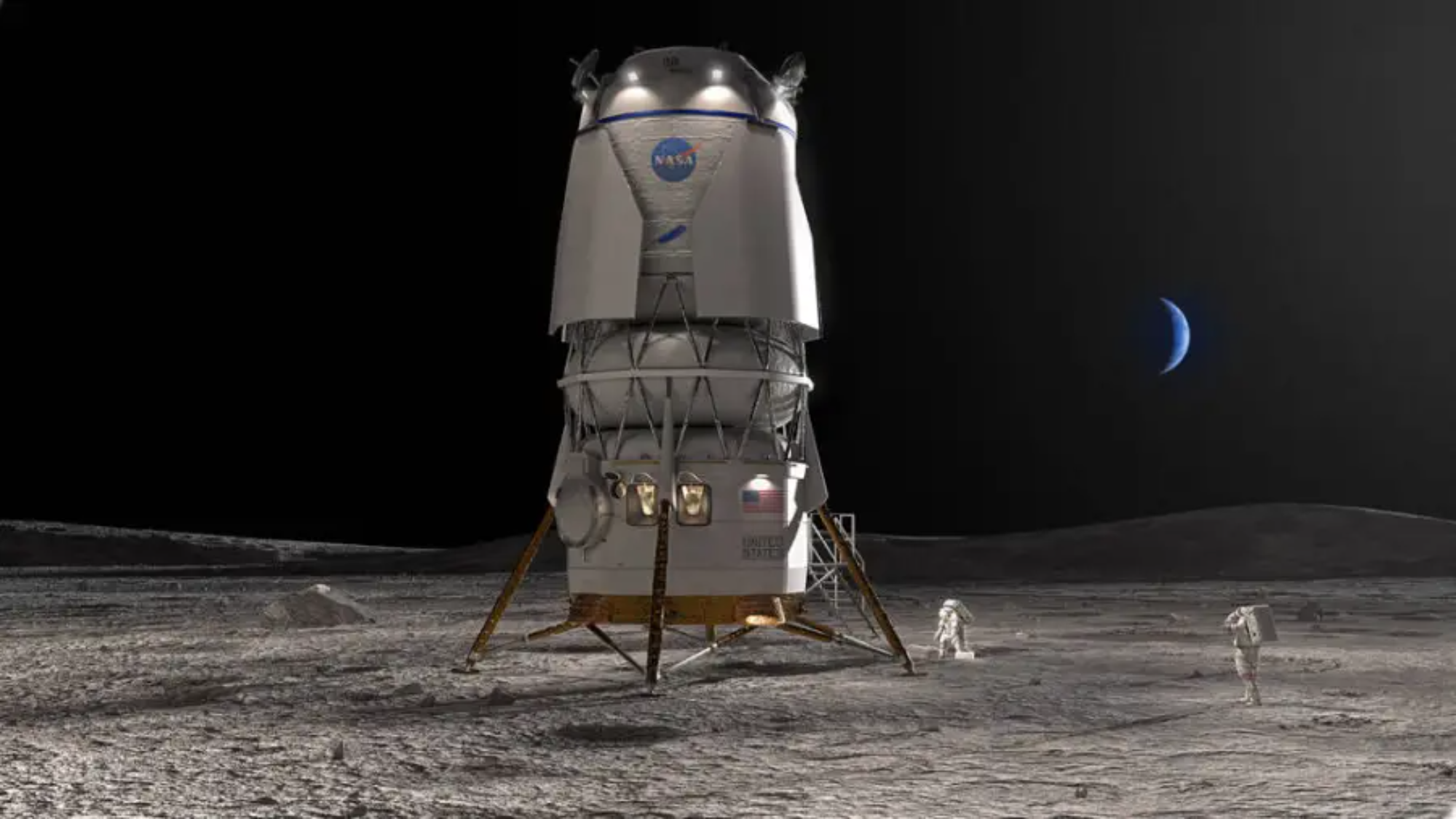
A new study warns that methane exhaust from lunar landers could contaminate ancient ice deposits near the moon's poles, potentially destroying evidence of prebiotic molecules that may have sparked life on Earth. Researchers at the European Space Agency and Instituto Superior Técnico simulated how methane from planned Artemis missions would spread across the lunar surface, finding the substance reaches the moon's polar regions in days and accumulates in the same cold areas where billions-year-old ice sits preserved. The contamination could destroy a uniquely intact molecular record that no longer exists on Earth due to billions of years of geological change.
Computer models showed that over half of methane expelled during a south pole landing gets trapped in polar ice within one lunar week, with 42% concentrating at the south pole itself. The moon's lack of atmosphere allows the methane to spread ballistically across the surface at speeds that would be impossible on Earth. The study suggests selecting colder landing sites might reduce methane spread, though researchers emphasize the need for additional simulations to identify other potential contaminants and develop lunar landing protocols that balance exploration goals with scientific preservation.