
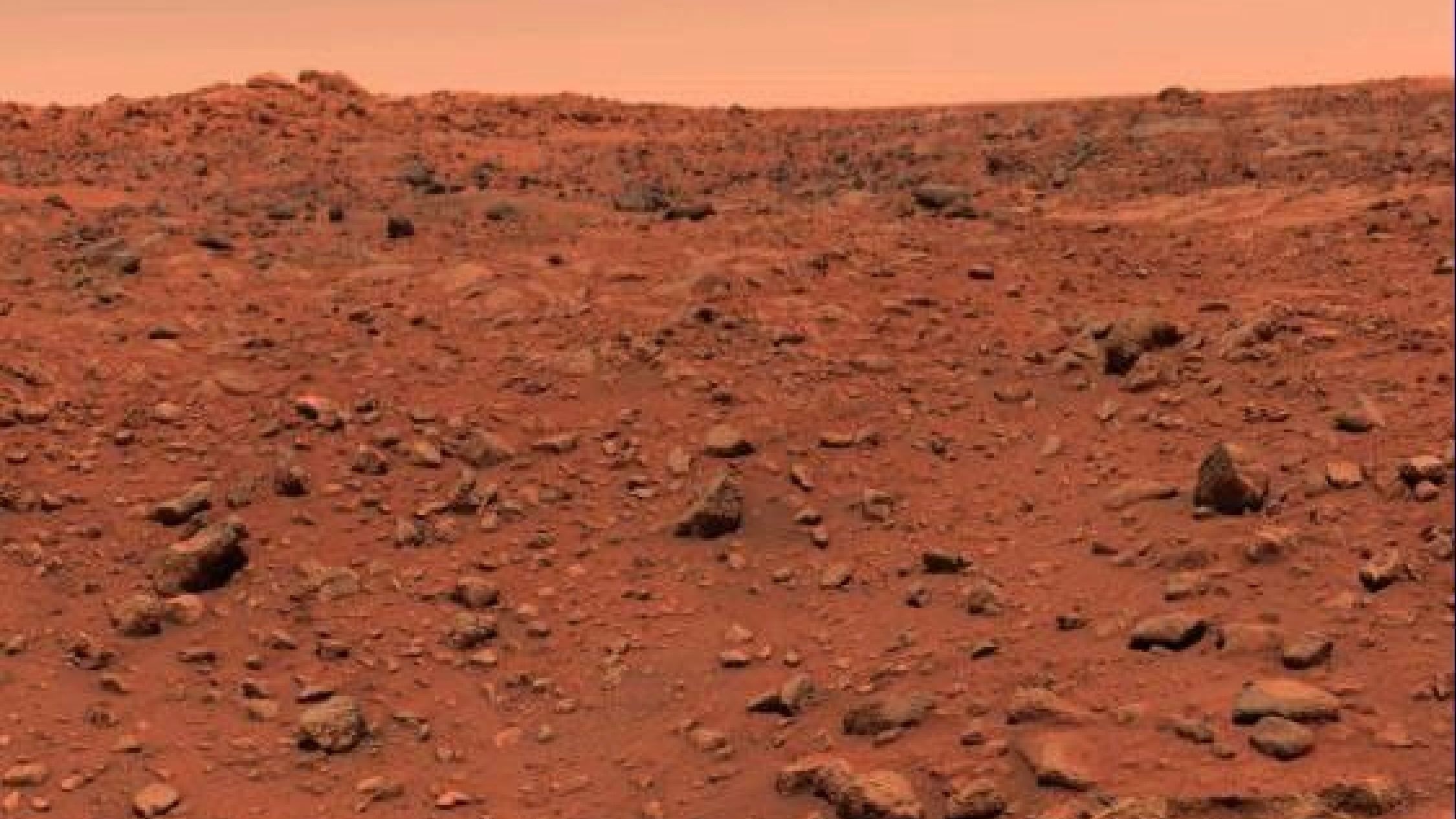
Viking 1 touched down on Mars 50 years ago on July 20, 1976, beginning humanity's first direct search for microbial life on the Red Planet. The lander and its twin, Viking 2, carried three separate life-detection experiments designed to test Martian soil samples. While the scientific consensus concluded Viking found no life, several researchers now argue the results were misinterpreted or inconclusive, prompting renewed questions about whether the missions actually detected biological activity.
One experiment -- Gilbert Levin's Labeled Release instrument -- produced a strong positive response when nutrients were added to soil samples. However, skepticism arose because a second nutrient addition showed no further response, and no organic molecules were detected by the onboard gas chromatograph-mass spectrometer (GCMS). Many scientists attributed the initial response to chemical reactions from certain minerals rather than biological activity. Ben Clark, who designed one of Viking's instruments, notes that hydrogen gas was available in the GCMS equipment located just centimeters from the life-detection package, yet was never supplied to those experiments -- despite some Earth microbes thriving on hydrogen combined with sulfates.
Astrobiochemist Steven Benner contends that the GCMS misinterpretation became the sole justification for dismissing positive life-detection data, and that the scientific community defended this consensus despite weakening evidence. He argues Viking likely found autotrophic microbial life at roughly 1,000 cells per gram -- consistent with Earth analogs. Recent Mars rover discoveries of organic molecules and geological features interpreted as biological activity have added weight to questions about whether Viking's negative conclusion was premature.
The preservation of Viking data has gained importance as technology and understanding evolve. Barry DiGregorio warns that recent decades of Mars missions may have inadvertently introduced Earth extremophiles to Mars, complicating future life-detection efforts. He suggests comparing new findings against archived Viking biology data will be crucial for distinguishing Martian life from terrestrial contamination. Both landers stopped operating over four decades ago, but their datasets remain valuable as the search for Mars life continues.